 Learn Arabic
Choosing the best book to learn Quranic Arabic is the single decision that determines whether you understand the Qur’an in six months or quit in six weeks.
Most learners pick the wrong starting point — a grammar manual written for madrasah students, or a modern conversational course that never touches a single ayah — and lose a year to material that was never built for their goal.
Quranic Arabic is the classical Arabic register of the Qur’an. It shares its grammar with Modern Standard Arabic but uses a narrower, highly repetitive vocabulary, which is exactly why the right book can move you to comprehension far faster than general Arabic study.
This guide ranks the ten best Quranic Arabic books, who each one is for, and how long each realistically takes.
At Learn Arabic In the UAE Academy, these are the same texts our instructors teach from every week, so the recommendations here reflect what students actually finish — not what looks impressive on a shelf.
1. Madinah Arabic Course (Books 1–3)
The Madinah Arabic Course is the standard Quranic Arabic textbook used at the Islamic University of Madinah, built specifically for non-Arab adult learners. Three books of roughly 150 pages each carry you from the Arabic alphabet to intermediate Qur’an comprehension.
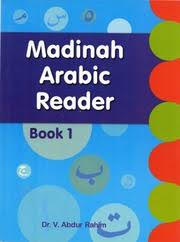
It is the most widely used Arabic course in the global Muslim community, and for the majority of adult learners it is the best book to learn Quranic Arabic from a standing start. Free PDFs are widely available, and YouTube companion series walk through every lesson if you get stuck between classes.
Its method is inductive — you meet a sentence, then the rule behind it — which suits learners who absorb patterns better than tables.
If you want this series taught properly rather than skimmed alone, our Madinah Arabic Course follows the same sequence with an instructor correcting your i’rab in real time.
Best for: absolute beginners who want the most proven path to Quranic Arabic.
2. Arabic Tutor (4 Volumes) — Mawlana Abdus Sattar Khan
Arabic Tutor is a four-volume grammar course translated from Urdu and used in the Deobandi madrasah tradition. It is dense, traditional, and relentlessly systematic — nahw and sarf explained the way a classical teacher would sequence them.
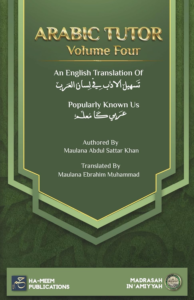
This is not a casual read. Expect six to twelve months on grammatical foundations before you comfortably open the Mushaf unaided.
Choose it only if you are committed to depth over speed. Students who finish it read classical tafsir with noticeably more confidence than those who stopped at a beginner course.
3. Access To Qur’anic Arabic — Abdul Wahid Hamid
Access to Qur’anic Arabic is a three-part set — Textbook, Workbook, and Qur’anic Selections — that teaches foundational Arabic grammar using Qur’anic vocabulary exclusively.
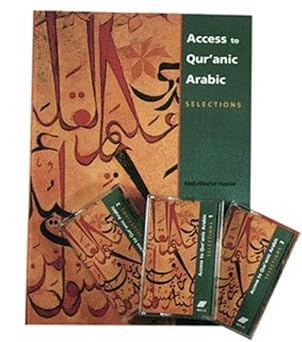
There are no invented example sentences and no colloquial Arabic: every exercise and every illustration is drawn from the Qur’an itself.
That design makes it unusually efficient for learners whose goal is understanding the Qur’anic text rather than conversation. The textbook places the grammar lesson on one page and the verses demonstrating that rule opposite it, so you never study a rule in isolation from its Qur’anic use.
The Selections volume introduces unvowelled Arabic early, which is the bridge most beginner books skip and the reason many learners freeze the first time they open a plain Mushaf.
The grammatical jumps between chapters are steep, so this is a book that rewards working alongside a teacher rather than alone. Best for: motivated adult beginners who want every lesson tied directly to the Qur’an.
4. Gateway to Arabic — Dr. Imran Hamza Alawiye
Gateway to Arabic is a UK-published series used across British Islamic schools and weekend madaris. Book 1 begins with the Arabic letters; subsequent books build grammar in small, clearly typeset steps.
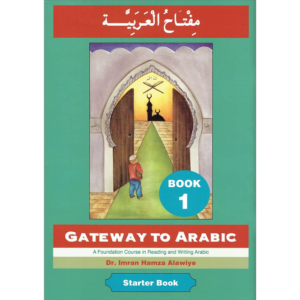
Its typographic clarity is the reason teachers keep choosing it. Large script, generous spacing, and short exercises make it the most practical option for children aged 7–13 and for adults who found denser Arabic books discouraging.
Families often start children here and move them to the Madinah series around age twelve. Our Arabic Classes for Beginners at Learn Arabic In the UAE Academy use this same gentle progression for learners starting from scratch.
Read also: Common Mistakes New Arabic Learners Make
5. Quranic Arabic Made Simple
Quranic Arabic Made Simple is a modern, English-medium three-volume course written for adults studying alone. Explanations assume no prior linguistic vocabulary, and every rule is tied back to Qur’anic usage.
The practical design target is Qur’an comprehension within six to twelve months of consistent study — a realistic goal if you work through it steadily rather than in bursts.
For a learner who already abandoned one traditional grammar manual, this is often the best book to learn Quranic Arabic second time around, because nothing in it assumes you know what a jussive or a broken plural is before it explains them.
Step Inside Our Classrooms
Don’t just take our word for it—see our community in action. Click below to watch real, live snippets from our recent classes and experience our engaging teaching style firsthand!
Master Arabic in the UAE
Experience world-class Arabic language training designed for students and professionals in the Emirates.
Book Your Free Trial6. Hans Wehr Dictionary of Modern Written Arabic
The Hans Wehr dictionary is the reference standard for Arabic–English lookup, organised by triliteral root rather than alphabetically by spelling. Every serious Quranic Arabic student eventually needs it.
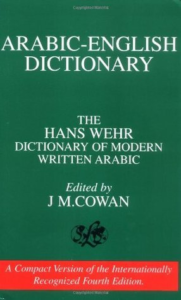
Learning to use it is a skill in itself: you must strip a word to its root before you can find it, which is precisely the habit that makes Qur’anic vocabulary click.
Available in print and as an app. Buy it once; you will use it for years.
7. The 80% Quranic Words — Wahiduddin Khan
The 80% Quranic Words is a frequency-based vocabulary aid covering the roughly 200 most-repeated Qur’anic words, which account for close to 80% of the text by occurrence.
The mechanism behind this is simple and powerful: Qur’anic vocabulary is finite and internally repetitive, so high-frequency words deliver disproportionate comprehension gains early.
Treat it as a companion, not a course. Paired with a grammar book, it is the fastest way to feel real progress in your first month of learning Quranic Arabic.
8. Lisan ul-Quran (3 Volumes)
Lisan ul-Quran is a traditional Quranic Arabic curriculum from the Pakistani madrasah tradition, available in translation. It demands consistent daily study and rewards it with genuine grammatical depth.
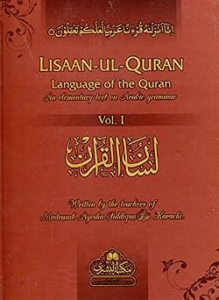
It suits learners with subcontinental heritage who want a course that matches the methodology their family or local mosque already teaches.
Progress is slower than modern courses, but the grammatical foundation is unusually solid.
9. Al-Kitaab fii Ta’allum al-‘Arabiyya — Brustad, Al-Batal, Al-Tonsi
Al-Kitaab is the standard Arabic textbook across US and UK higher education, published in three parts with accompanying audio. Its focus is Modern Standard Arabic with classical exposure rather than Qur’an-first instruction.
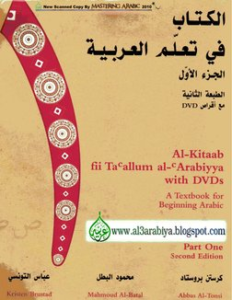
Choose it if you are enrolled in formal university Arabic and want one book serving both your degree and your Qur’an study.
For purely Qur’anic goals, the Madinah series gets you there faster.
10. Lane’s Arabic–English Lexicon — Edward William Lane
Lane’s Lexicon is a 19th-century lexicon of classical Arabic running to eight volumes, compiled from the great classical Arabic dictionaries. It is the reference work for serious Qur’anic word studies.
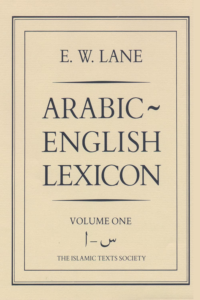
It is not a learning resource. You consult it when you need the full classical semantic range of a root — the shades of meaning a one-line translation flattens.
It is freely available online through archive.org and similar sources. Reaching the level where you can use it comfortably means your Arabic has arrived.
Quick Comparison of the Best Quranic Arabic Books
Use this table to shortlist two candidates before reading the selection framework below. The best book to learn Quranic Arabic for you is almost always the one whose timeline matches the hours you can realistically give it.
| Book | Best For | Level | Focus | Realistic Timeline |
| Madinah Arabic Course | Most beginners | Beginner → Intermediate | Grammar via Qur’anic text | 12–18 months |
| Arabic Tutor | Serious grammar study | Intermediate | Nahw & sarf | 6–12 months to foundation |
| Access to Qur’anic Arabic | Qur’an-first beginners | Beginner → Intermediate | Grammar through Qur’anic vocabulary | 9–12 months |
| Gateway to Arabic | Children & nervous beginners | Beginner | Script + basic grammar | 9–12 months |
| Quranic Arabic Made Simple | Self-study adults | Beginner | Applied Qur’anic grammar | 6–12 months |
| Hans Wehr | All serious students | All | Root-based reference | Ongoing |
| The 80% Quranic Words | Fast early wins | Beginner | High-frequency vocabulary | 4–8 weeks |
| Lisan ul-Quran | Traditional learners | Beginner → Advanced | Classical curriculum | Multi-year |
| Al-Kitaab | University students | Beginner → Advanced | MSA with classical exposure | 2–3 years |
| Lane’s Lexicon | Advanced researchers | Advanced | Classical lexicography | Reference only |
Read also: Arabic Grammar For Quran
Common Mistakes When Learning Quranic Arabic from Books
Most failed attempts are not caused by picking the wrong title. Even the best book to learn Quranic Arabic fails against four predictable habits, each avoidable once you can name it.
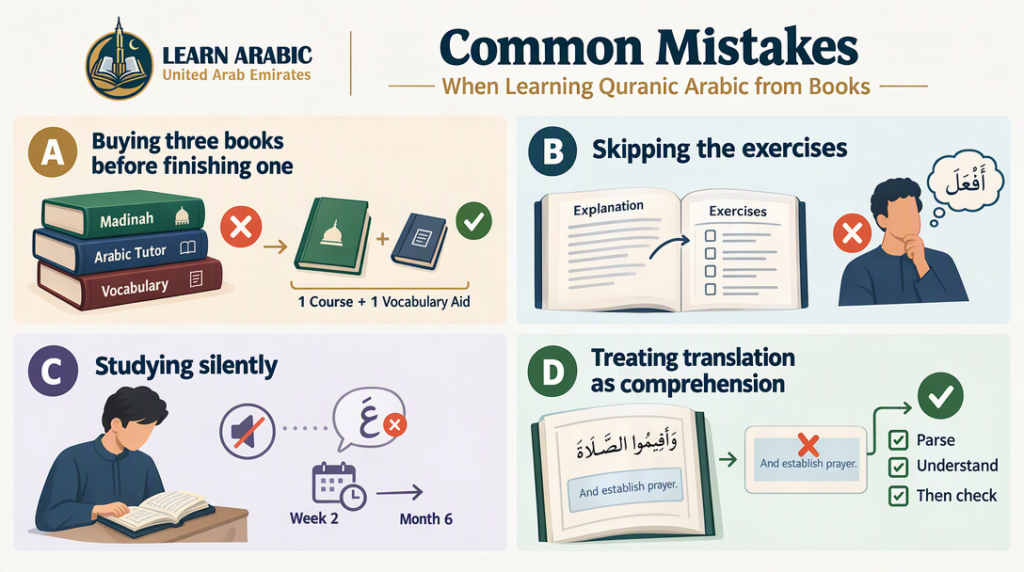
- Buying three books before finishing one: Learners commonly own Madinah, Arabic Tutor, and a vocabulary book simultaneously and complete none. One grammar course plus one vocabulary aid is the correct maximum.
- Skipping the exercises: The exercises are where grammar becomes recognition. Reading explanations without doing the drills produces students who can define a rule but cannot spot it in an ayah.
- Studying silently: Quranic Arabic books are silent instruments. They cannot hear a mispronounced ‘ayn or a misplaced case ending, and errors learned in week two become habits by month six.
- Treating translation as comprehension: Reading an English translation alongside the Arabic feels like progress but bypasses the grammar entirely. Cover the translation, parse the sentence, then check.
See Our Classroom Environment in Action
Experience a sneak peek into our live sessions. Watch the video below to see our specialized instructors interacting with students, breakdown complex texts, and cultivate an engaging, respectful learning environment.
Master Arabic in the UAE
Experience world-class Arabic language training designed for students and professionals in the Emirates.
Book Your Free TrialStart Reading the Qur’an in Arabic — Book Your Free Trial Class Today
You already know which book fits your level. What a book cannot give you is correction — the instant feedback that stops a wrong pronunciation or a misread case ending from hardening into a habit.
Learn Arabic In the UAE Academy pairs the best book to learn Quranic Arabic for your level with qualified native-speaking instructors who teach in clear English.
You study the Madinah series, Gateway to Arabic, or a frequency-vocabulary track with someone checking your work live, on a schedule built around your week.
Our Arabic courses:
- Arabic Course in the UAE
- Arabic Intensive Course
- Arabic Classes for Beginners (Learn Arabic from Scratch)
- Madinah Arabic Course
- Arabic Classes for Adults
- Self-Paced Arabic Course
- Arabic Speaking Classes
- Learn to Write Arabic Course
- Arabic Grammar Course
Book your free trial class now
Conclusion
The best book to learn Quranic Arabic is the one matched to your reading ability, your goal, and the hours you can genuinely commit.
For most adult beginners that is the Madinah Arabic Course; for children and cautious starters, Gateway to Arabic; for fast early momentum, a frequency-based vocabulary aid alongside your grammar course.
What every one of these Quranic Arabic books shares is a limitation: they cannot hear you. Structured text gives you the map, but guided instruction is what keeps you walking it.
Pick one book, finish it, and pair it with a teacher who corrects you weekly. Learn Arabic In the UAE Academy exists for exactly that second half.

Frequently Asked Questions About the Best Book to Learn Quranic Arabic
These are the questions learners ask most often before choosing their first Quranic Arabic book. Short answers below, with the practical detail you need to act on them.
1. What is the fastest book to learn Quranic Arabic?
The 80% Quranic Words is the fastest route to recognising Qur’anic text, because it teaches the roughly 200 words covering most of the Qur’an by occurrence. Pair it with a grammar course — speed without structure plateaus quickly.
2. Is Quranic Arabic different from Modern Standard Arabic?
Quranic Arabic and Modern Standard Arabic share the same core grammar but differ in vocabulary and style. Quranic Arabic uses classical forms and a narrower, more repetitive lexicon, which makes it faster to learn for comprehension purposes.
3. Do I need to read Arabic script before starting these books?
Yes. Every book on this list except Gateway to Arabic Book 1 assumes you can read Arabic script. Spend four to eight weeks on the alphabet and vowel marks first — it saves months later.
4. At what age can children start learning Quranic Arabic?
Children can begin Quranic Arabic from around age seven, once they read Arabic letters confidently. Gateway to Arabic is the best book to learn Quranic Arabic for ages 7–13 because of its clear typography and short lessons.
5. Can I learn Quranic Arabic from books alone?
You can build vocabulary and grammar knowledge from books alone, but not accurate pronunciation or confident parsing. Books give no corrective feedback, which is why most self-study learners stall at the intermediate stage without a teacher.



[…] your goal is the Quran, this guide to the best books to learn Quranic Arabic shows what to read next, ranked by […]