 Learn Arabic

When you try to read a tafsir and hit a wall of unfamiliar terms like marfoo’, mansoob, or i’rab, you already know the problem.
Arabic grammar for quran study isn’t optional background reading. It’s the tool that unlocks meaning. Without it, you’re reading a translation of someone else’s understanding, not the text itself.
This guide shows you why grammar is so important for reading the Quran, and which two sciences you actually need (nahw and sarf). It also illustrates the order scholars recommend studying them in, and the books and study habits that get real results.
You’ll also see clear examples of how a single grammatical marker can change the meaning of a verse, because that’s the whole point of learning this.
Why Arabic Grammar Matters For Reading The Quran
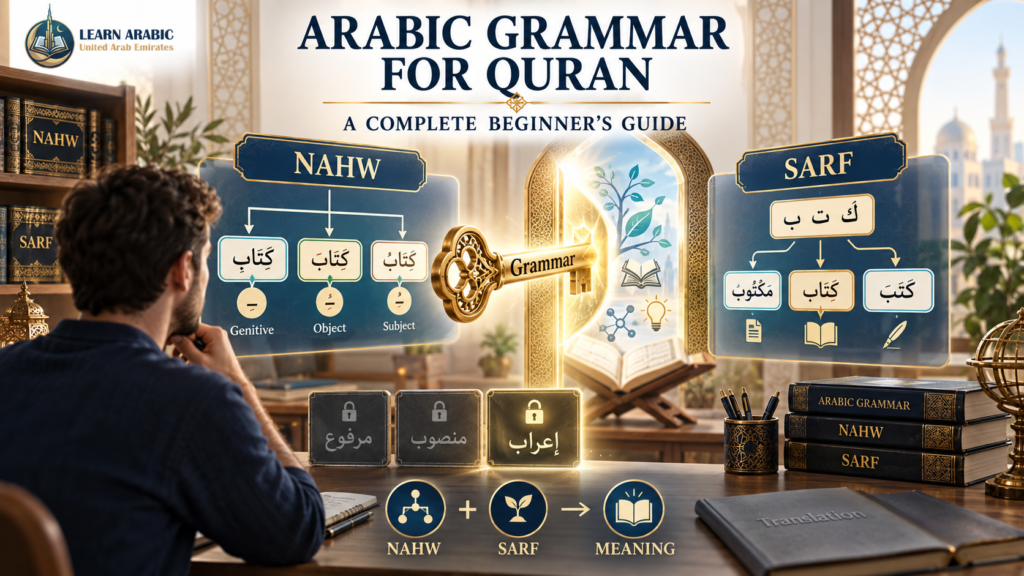
Arabic grammar is the set of rules that governs how a word’s ending changes based on its role in a sentence, such as subject, object, possessive, and so on. It also explains how a word’s internal structure changes to produce different meanings from the same root.
In Quranic studies, these two sciences have names: Nahw نحو (syntax, which governs word endings and sentence structure) and Sarf صرف (morphology, which governs how root letters are reshaped into different word forms).
Scholars of tafsir have treated these two sciences as foundational rather than optional. The reason is that the Quran’s meaning is carried in details that a translation cannot preserve.
Mekki ibn Abi Talib, a classical exegete, described nahw as the tool that lets a student of the Quran recognize the “true meanings” hidden in a verse’s grammatical structure, arguing that knowing the mechanics of i’rab (grammatical inflection) reveals distinctions in meaning that would otherwise be missed entirely.
The stakes are not abstract. A single change in a word’s case ending can shift who is doing an action versus who is receiving it, or turn a statement of praise into something closer to blasphemy.
Read also: How Long to Learn Arabic in the UAE?
A Real Example – One Vowel, One Meaning Shift
A reciter of the Quran should be aware of the grammar, Nahw and Sarf, and read each word of the Mus’haf carefully in order to keep the meaning of words and sentences correct. For example, take the verse:
إِنَّمَا يَخْشَى اللَّهَ مِنْ عِبَادِهِ الْعُلَمَاءُ
“Only those of His servants who have knowledge fear Allah” (Surah Fatir, 28).
In Arabic, the word for “knowledge” (al-‘ulama’) and the word for “Allah” both carry grammatical case endings that determine which one is the subject and which is the object.
If a reciter shifts the case ending, putting the wrong word in the subject position, the sentence’s meaning inverts: instead of describing scholars as the ones who fear Allah, it can be misread as describing Allah as fearing His servants.
This is exactly the kind of error early Muslim scholars worked to prevent by formalizing Nahw as a discipline attached directly to Quranic preservation.
A Documented Historical Correction
Classical sources record cases where reciters without grammar training mispronounced word endings during recitation. For example, reading a plural noun with the wrong case marker, changing “the wrongdoers” from one grammatical role to another mid-sentence.
These weren’t stylistic slips. They were the kind of error that changes who a verse is talking about. Incidents like this are part of why the science of Nahw was formally organized in the first place; tradition credits Abu al-Aswad al-Du’ali with codifying early grammar rules specifically to protect Quranic recitation from this kind of drift.
As a gentle reminder, grammar isn’t a hurdle between you and the Quran. It’s the mechanism that keeps the text’s meaning stable across a billion readers and fourteen centuries.
If working through case endings and word structure on your own feels overwhelming, structured guidance from a live teacher- the kind offered in Learn Arabic UAE’s Quranic Arabic courses- removes most of the guesswork of figuring out where to start.
Read Also: Arabic Grammar For Beginners
Nahw vs. Sarf – The Two Major Sciences Of The Arabic Grammar For Quran
Nahw نحو is the science that governs how a word’s ending changes according to its grammatical role in a sentence, such as subject, object, or possessive, and how words connect into correct sentence structure.
Sarf صرف is the science that governs how a word’s internal root is reshaped into different forms, past tense, present tense, command form, active participle, and more, to produce related but distinct meanings.
You need both, and they work together. Nahw tells you why a word’s ending is what it is; sarf often explains what allows that ending to exist in the first place.
A clear example: in the verse describing angels asking about a “successor” (khalifah) on earth
(Surah Al-Baqarah, 30), وَإِذْ قَالَ رَبُّكَ لِلْمَلَائِكَةِ إِنِّي جَاعِلٌ فِي الْأَرْضِ خَلِيفَةً ۖ قَالُوا أَتَجْعَلُ فِيهَا مَن يُفْسِدُ فِيهَا وَيَسْفِكُ الدِّمَاءَ وَنَحْنُ نُسَبِّحُ بِحَمْدِكَ وَنُقَدِّسُ لَكَ ۖ قَالَ إِنِّي أَعْلَمُ مَا لَا تَعْلَمُونَ
the word is grammatically in the object position, but the reason it takes that ending is that the preceding word is an active participle, and active participles function like verbs, assigning objects the same way a verb would. You can’t fully explain the nahw without the sarf.
Why Beginners Often Skip Sarf When Learning Arabic Grammar For Quran
A common mistake among self-taught students is spending months on nahw textbooks while treating sarf as an afterthought.
The result is a student who can label a word’s case ending but can’t explain why that ending exists, because the explanation often sits in the word’s morphological form, whether it’s an active participle, a verbal noun, or a derived form. Studying both together, even briefly, prevents this gap.
Read also: Arabic Writing Practice in the UAE
Step Inside Our Classrooms
Don’t just take our word for it—see our community in action. Click below to watch real, live snippets from our recent classes and experience our engaging teaching style firsthand!
Master Arabic in the UAE
Experience world-class Arabic language training designed for students and professionals in the Emirates.
Book Your Free TrialHow To Start Studying Arabic Grammar For Quran
The traditional and still-recommended sequence is: foundational nahw first, then sarf, then balagha (rhetoric and eloquence) once the first two are stable.
This isn’t arbitrary. Nahw gives you the skeleton of a sentence, sarf explains the shape of individual words within it, and Balagha only becomes meaningful once you can already parse a sentence correctly.
1. Step One For Quranic Grammar – Foundational Nahw
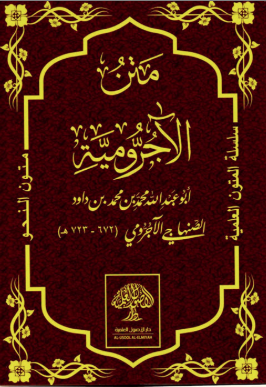
Start with Matn al-Ajurumiyyah, the short classical primer that has been the entry point for Arabic grammar students for centuries.
Use it alongside a simplified commentary rather than the bare text; two commonly recommended options are the explanation by Muhammad Muhyi al-Din Abd al-Hamid and the explanation by Sheikh Muhammad ibn Salih al-Uthaymin.
Both break down the terse original text into plain, workable steps. This stage typically covers the basic sentence types, the core case endings (rafa, nasb, jarr, jazm), and how to identify a sentence’s subject and predicate.
2. Step Two For Quranic Grammar – Sarf (Morphology)
Once you have solid Nahw fundamentals, move to Sarf. Shadha al-‘Arf fi Fann al-Sarf is a widely used starting text that covers how root letters are transformed into verb forms, participles, and verbal nouns — the mechanics behind words like kataba (he wrote), katib (writer), and maktub (written), all built from the same three-letter root.
3. Step Three For Quranic Grammar – Balagha (Rhetoric)
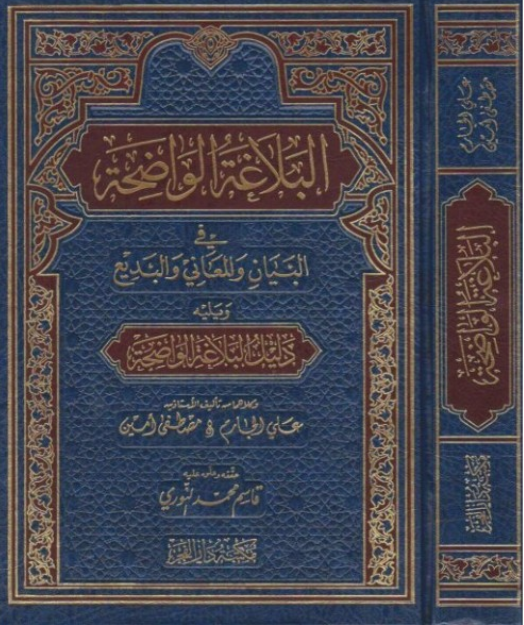
Once you can parse sentences and recognize word forms without constant hesitation, Al-Balagha Al-Wadihah by Ali Al-Jarim is the standard accessible entry point for rhetoric and eloquence. It is the layer that explains why the Quran chooses one phrasing over another, not just what each phrasing means grammatically.
Kindly notice that this sequence is exactly how Learn Arabic UAE structures its Nahw and Sarf track, moving learners from Ajurumiyyah through sarf fundamentals with a live instructor checking understanding at each stage. That means you’re not guessing whether you’re ready to move on.
Read Also: Arabic Long Vowels – The Complete Guide To ا و ي
Common Mistakes Self-Taught Students Make When Learning Arabic Grammar For Quran
The most frequent mistake is treating grammar study as memorization of rules in isolation, rather than immediately applying each new rule to real Quranic verses.
A rule like “the active participle assigns an object” means little until you’ve located it inside three or four actual ayat and identified the object yourself.
A second recurrent mistake is skipping foundational texts to jump straight into advanced tafsir discussions of grammatical disagreement.
For instance, debates over how a shift in case ending in Surah Al-Ma’idah (verse 69) affects whether a particular group is being described as believers or not. These debates are genuinely valuable, but they’re unreadable without the basic case-ending vocabulary first.
A third mistake, and arguably the most damaging long-term, is studying entirely alone with no way to check pronunciation or parsing against a knowledgeable source.
Classical scholarly advice on this point is direct and specific: seek out reliable teachers, even through modern means like recorded lectures or online instruction, rather than relying solely on self-directed reading, because grammar mistakes in recitation are exactly the kind of error that’s hard to self-detect.
Read Also: Arabic Short Vowels

Realistic Timelines For Learning Arabic Grammar For Quran
There’s no fixed, universal number of months. Pace depends on how many hours per week you can commit and whether you have someone reviewing your work.
What’s realistic to say is that foundational Nahw (working through Al-Ajurumiyyah with a commentary) is commonly treated as a first milestone before moving to sarf, and rushing past it to reach advanced material tends to create the exact gaps described above.
On the question of self-study alone: it’s possible to make real progress with free online material, and there’s no shortage of it. But the consistent scholarly advice is to combine self-study with access to a teacher wherever possible.
The reason is not that self-study fails, but because grammar is a discipline where small misunderstandings compound silently. A teacher catches the misreading before it becomes a habit.
Free Online Resources To Learn Arabic Grammar For Quran
Learning Arabic grammar for the Quran does not always require a course. Several free online resources provide structured lessons in Nahw, Sarf, vocabulary, and sentence analysis. These resources allow beginners to strengthen their understanding at their own pace.
The following channels and apps are useful starting points for seeing grammatical rules applied directly to Quranic Arabic.
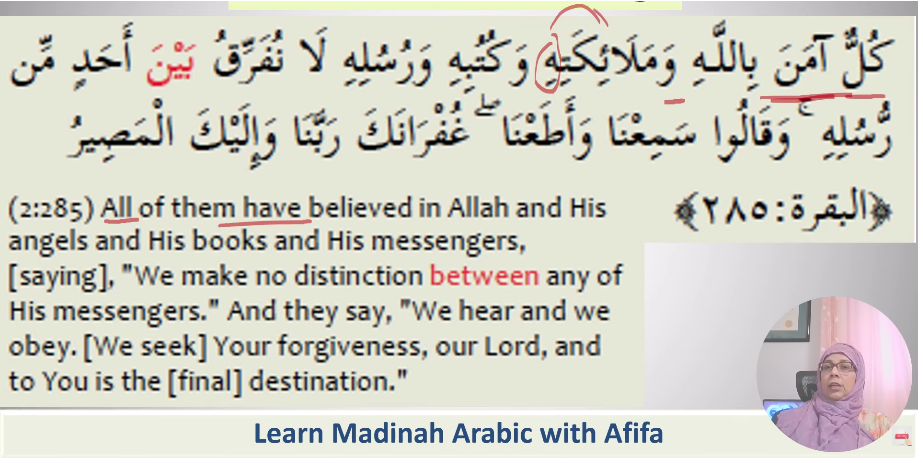
1. The Language of Quran YouTube channel
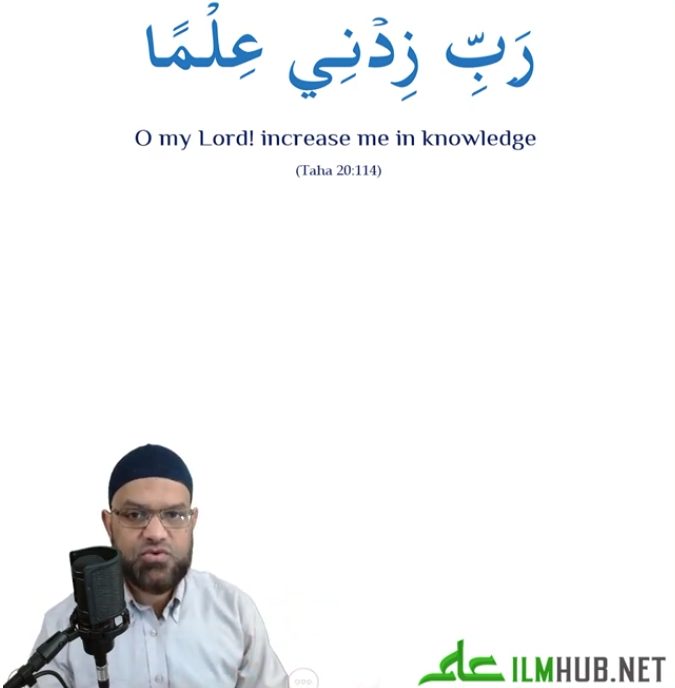
The Language of Quran YouTube channel offers a free, structured video series on Arabic morphology and grammar (Sarf and Nahw). Its detailed lessons cover word derivation, verb conjugation, and sentence structure, helping learners understand Quranic Arabic systematically while studying at their own pace.
2. The LearnQuranicArabic YouTube channel
The LearnQuranicArabic YouTube channel offers a free, well-organized series based on Madina Book 1. Its step-by-step lessons help beginners build a solid foundation in Arabic grammar, vocabulary, verb usage, and sentence construction for better understanding of Quranic Arabic.
3. The Understand Quran Deeply YouTube channel
The Understand Quran Deeply YouTube channel offers a free, beginner-friendly series on Quranic Arabic grammar. Its short lessons use examples from the Quran to explain pronouns, interrogatives, adverbs, and sentence structures, helping learners understand Arabic grammar in context.
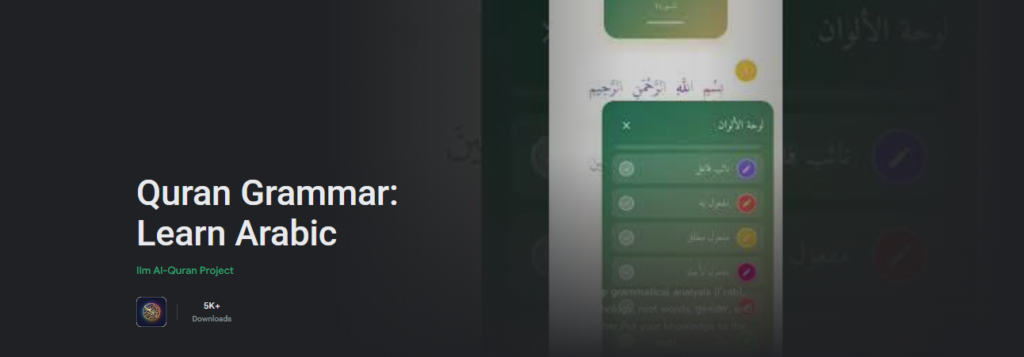
4. The Quran Grammar – Learn Arabic App
The Quran Grammar: Learn Arabic app helps learners study Quranic Arabic through detailed grammatical analysis of Quranic words. Its color-coded i‘rab, syntax, and morphology features make grammatical roles easier to recognize and understand in context.
Read Also: Connecting Arabic Letters Practice
Start Learning Quranic Arabic Grammar With Guided Support
Trying to work through Ajurumiyyah, sarf patterns, and real Quranic examples with no one to check your understanding is where most self-taught students stall out.
Learn Arabic UAE’s Quranic Arabic grammar courses take you through the same Nahw-then-Sarf sequence covered in this guide, with a live instructor reviewing your parsing of real verses at every stage. As a result, mistakes get caught in week two, not year two.
If you would like a clearer path through Nahw, Sarf, and Quranic application, explore Learn Arabic UAE’s guided lessons and build your understanding with supportive, step-by-step instruction.

See Our Classroom Environment in Action
Experience a sneak peek into our live sessions. Watch the video below to see our specialized instructors interacting with students, breakdown complex texts, and cultivate an engaging, respectful learning environment.
Master Arabic in the UAE
Experience world-class Arabic language training designed for students and professionals in the Emirates.
Book Your Free TrialConclusion
Arabic grammar for Quran study comes down to two sciences working together: nahw, which governs word endings and sentence roles, and sarf, which governs how root letters become different word forms.
The recommended path is foundational nahw first (Al-Ajurumiyyah with a simplified commentary), then sarf (starting with Shadha al-‘Arf), then balagha once both are stable. Real Quranic verses should be part of your practice from the very first week, not saved for later.
The examples in this guide- a shifted case ending changing who fears whom in Surah Fatir, a misread ending altering a description of wrongdoers- aren’t edge cases. They’re the ordinary reason this discipline exists.
If you take one thing from this guide, let it be this: study the rules, but check every rule against a real verse, and get a second set of eyes on your understanding whenever you can.
Frequently Asked Questions
What Is The Difference Between Nahw And Sarf In Quranic Arabic?
Nahw is the science of sentence structure and word endings. It tells you whether a word is a subject, object, or possessive based on its grammatical case. Sarf is the science of word formation.
It explains how a single root produces different related forms, like a verb, its active participle, and its verbal noun. Quranic grammar study needs both.
Do I Really Need Arabic Grammar To Understand The Quran?
Yes, if your goal is to engage with the Arabic text directly rather than rely entirely on translation. Translations convey general meaning, but grammatical details, case endings, verb forms, and sentence structure carry precision that scholars have shown can change a verse’s meaning when misread. Grammar is what lets you verify meaning rather than take someone else’s word for it.
Which Book Should I Start With To Learn Quranic Arabic Grammar?
Start with Matn al-Ajurumiyyah alongside a simplified commentary, such as the explanations by Muhammad Muhyi al-Din Abd al-Hamid or Sheikh Ibn al-Uthaymin.
This is the traditional entry point and covers the core case endings and sentence types you’ll need before moving to sarf.
How Long Does It Take To Learn Quranic Arabic Grammar?
There’s no fixed timeline. It depends on weekly study hours and whether you have a teacher reviewing your progress. Foundational nahw through Al-Ajurumiyyah is generally treated as the first milestone, reached before moving on to sarf and then balagha.
Can I Learn Quranic Arabic Grammar Without A Teacher?
You can make progress alone using free material, but scholarly advice consistently recommends pairing self-study with access to a knowledgeable teacher, even through recorded lectures or online courses.
Grammar mistakes are easy to make and hard to catch without a second set of eyes, and recitation errors specifically are the kind of thing this discipline was formalized to prevent.



Leave a Reply