 Learn Arabic
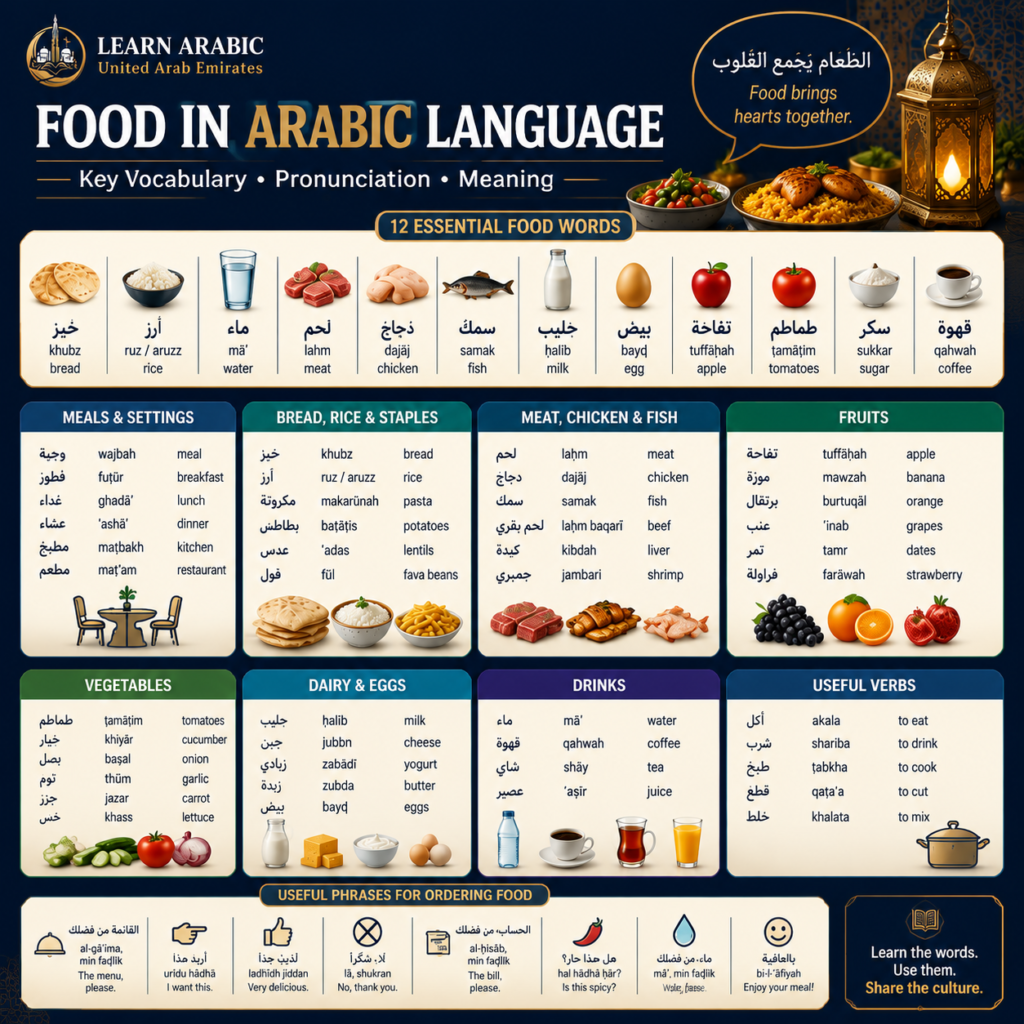
Have you ever sat at an Arabic restaurant, looked at the menu, and had no idea what to order? Or tried to shop at an Arabic market and struggled to name what you needed? Food vocabulary is where the gap between studying Arabic and actually using it becomes most obvious — and most fixable.
Learning food in Arabic language is one of the fastest ways to build practical, usable Arabic. These are words that come up every single day: at breakfast, in the grocery store, while cooking, while traveling, and in conversations with Arabic-speaking friends and family. Unlike grammar rules, food words have immediate, real-world application.
This guide gives you a complete Arabic food vocabulary system — organized by category, supported by transliteration, and loaded with real example sentences you can use today.
What You’ll Learn in This Article
- The most common food words in Arabic with English meanings and pronunciation
- Arabic vocabulary organized by food category: bread, meat, fruits, vegetables, drinks, and dairy
- Famous Arabic dish names every learner should know
- Essential Arabic verbs for talking about food
- Simple phrases for ordering food at a restaurant in Arabic
- How to organize your food vocabulary learning by real-life situation
Food in Arabic Language: The Words You Need First
Food in Arabic is طعام (ṭaʿām). In everyday spoken Arabic, you’ll also hear the word أكل (akl), which means food or eating and feels more casual. Both are widely used across the Arab world.
Before diving into categories, here are the most essential Arabic food words beginners should know first. These appear constantly in daily conversation, recipes, menus, and markets.
Here are the most common Arabic food words to start with:
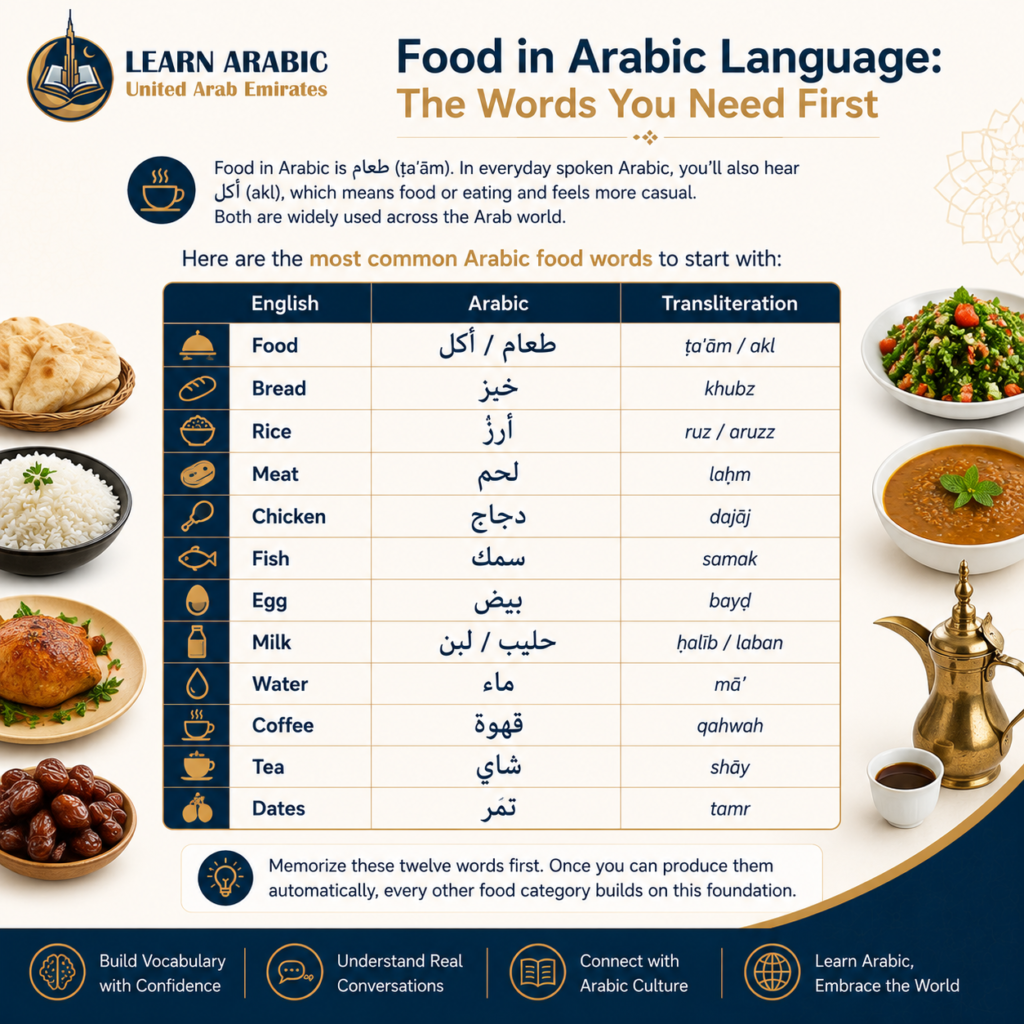
Memorize these twelve words first. Once you can produce them automatically, every other food category builds on this foundation.
Why Is Food the Best Entry Point into Arabic Vocabulary?
Food vocabulary works for Arabic learners for a specific reason: it is concrete. Every word in this list refers to something you can see, smell, taste, or hold. That physical connection makes retention dramatically faster than memorizing abstract grammar terms.
Food words also give you sentence-building material immediately. Once you know خبز and أريد, you can say أريد خبزًا — “I want bread.” Once you know قهوة and أحب, you can say أحب القهوة — “I like coffee.” You are no longer just memorizing; you are communicating.
For learners following a structured Arabic course, food vocabulary tends to be introduced in the earliest levels precisely because it combines high frequency, easy recall, and immediate conversational use. It is the perfect starting vocabulary set.
Join Our Arabic Course in the UAE with a FREE Trial

Basic Arabic Food Words: Meals, Settings, and Situations
Before learning specific food names, you need the words that frame eating itself. These are the words for meals, settings, and general food situations.
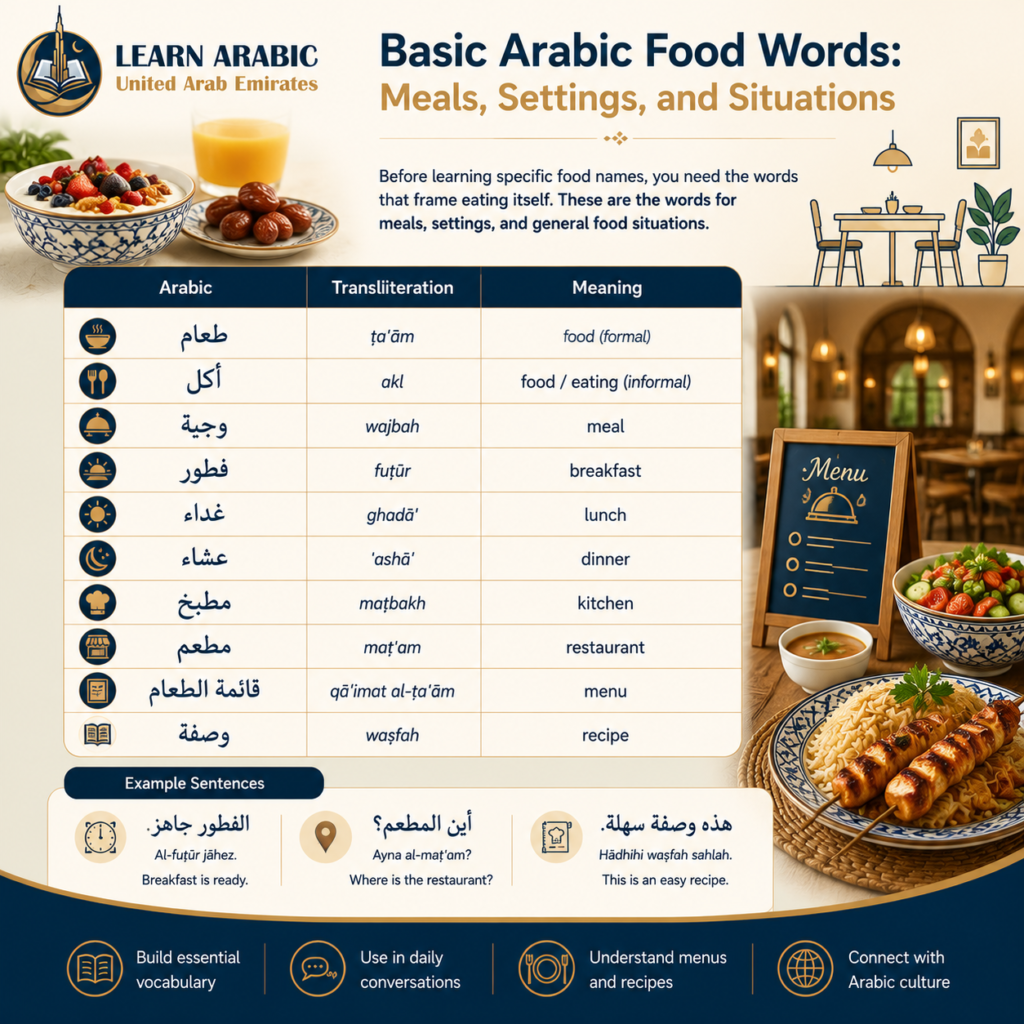
Here are the foundational Arabic food context words:
- طعام — ṭaʿām — food (formal)
- أكل — akl — food / eating (informal)
- وجبة — wajbah — meal
- فطور — fuṭūr — breakfast
- غداء — ghadā’ — lunch
- عشاء — ʿashā’ — dinner
- مطبخ — maṭbakh — kitchen
- مطعم — maṭʿam — restaurant
- قائمة الطعام — qā’imat al-ṭaʿām — menu
- وصفة — waṣfah — recipe
Example sentences using these words:
الفطور جاهز. — Breakfast is ready.
أين المطعم؟ — Where is the restaurant?
هذه وصفة سهلة. — This is an easy recipe.
Read more: How to Greet People in Arabic
Bread, Rice, and Main Staples in Arabic
Bread and rice are the foundation of most Arab meals.
خبز (bread) appears at virtually every table, and أرز (rice) is central to dishes like kabsa and mandi. Knowing these staple words gives you immediate access to the most common meal conversations.
One practical note: the word for rice varies slightly by region. You’ll hear ruz in the Gulf and aruzz in parts of the Levant and Egypt — both are understood across the Arab world.
Here are the key staple food words in Arabic:
- خبز — khubz — bread
- أرز — ruz / aruzz — rice
- مكرونة — makarūnah — pasta
- بطاطس — baṭāṭis — potatoes
- برغل — burghul — bulgur
- عدس — ʿadas — lentils
- فول — fūl — fava beans
- حمص — ḥummuṣ — chickpeas
- فاصوليا — fāṣūliyā — beans
Example sentences:
أريد خبزًا. — I want bread.
الأرز لذيذ. — The rice is delicious.
أحب العدس. — I like lentils.
Read More: Arabic Sentences for Kids
See Our Classroom Environment in Action
Experience a sneak peek into our live sessions. Watch the video below to see our specialized instructors interacting with students, breakdown complex texts, and cultivate an engaging, respectful learning environment.
Master Arabic in the UAE
Experience world-class Arabic language training designed for students and professionals in the Emirates.
Book Your Free TrialMeat, Chicken, and Fish in Arabic
Meat vocabulary is essential for reading menus, shopping at a butcher, and following Arabic recipes. These words also combine directly with cooking method words — grilled, fried, boiled — so you can describe any meat dish precisely.
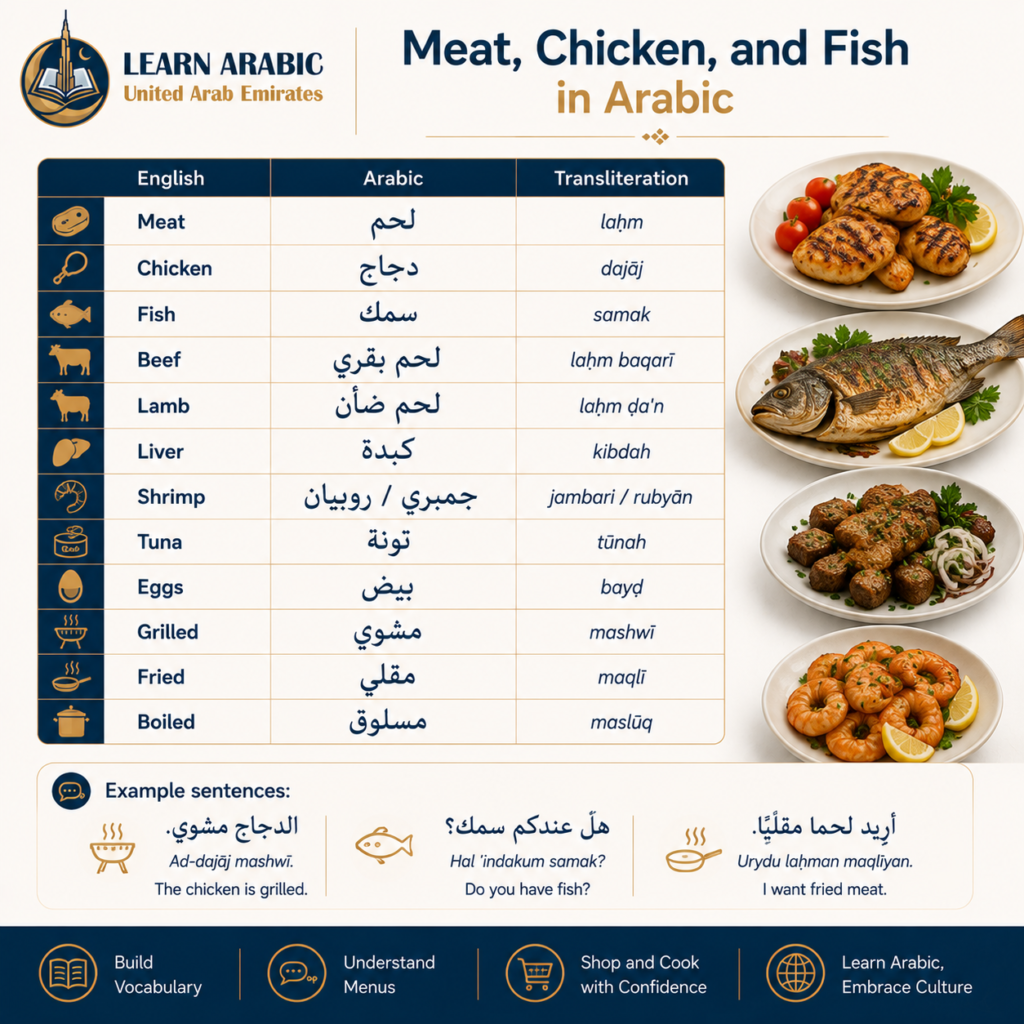
Here are the Arabic words for meat and protein:
- Meat — لحم (laḥm)
- Chicken — دجاج (dajāj)
- Fish — سمك (samak)
- Beef — لحم بقري (laḥm baqarī)
- Lamb — لحم ضأن (laḥm ḍa’n)
- Liver — كبدة (kibdah)
- Shrimp — جمبري / روبيان (jambari / rubyān)
- Tuna — تونة (tūnah)
- Eggs — بيض (bayḍ)
- Grilled — مشوي (mashwī)
- Fried — مقلي (maqlī)
- Boiled — مسلوق (maslūq)
Example sentences:
الدجاج مشوي. — The chicken is grilled.
هل عندكم سمك؟ — Do you have fish?
أريد لحمًا مقليًا. — I want fried meat.
Fruits in Arabic
Fruit words are among the easiest Arabic vocabulary to learn because they are visual and widely used in daily life. They also appear frequently in Arabic conversations about food, health, markets, and children’s meals.
A useful grammatical note: Arabic distinguishes between the collective noun (the fruit as a category) and the unit noun (a single piece).
تفاح means apples in general; تفاحة means one apple.
موز means bananas; موزة means one banana. This pattern applies across most fruit names and is worth learning early.
Here are Arabic fruit names with English meanings:
- Apple (one) — تفاحة (tuffāḥah)
- Banana (one) — موزة (mawzah)
- Orange — برتقال (burtuqāl)
- Grapes — عنب (ʿinab)
- Dates — تمر (tamr)
- Figs — تين (tīn)
- Strawberry — فراولة (farāwlah)
- Watermelon — بطيخ (baṭṭīkh)
- Mango — مانجو (mānjū)
- Peach — خوخ (khawkh)
- Pomegranate — رمان (rummān)
- Lemon — ليمون (laymūn)
Example sentences:
أحب التفاح. — I like apples.
التمر حلو. — Dates are sweet.
أريد عصير برتقال. — I want orange juice.
Vegetables in Arabic
Vegetables appear constantly in Arabic cooking — tomatoes, onions, garlic, and eggplant are the backbone of countless traditional dishes. You will also notice that some vegetables have regional name variations: طماطم is common in Gulf and Egyptian Arabic, while بندورة is used in parts of the Levant for the same tomato.
Here are the Arabic vegetable names to know:
| English | Arabic | Transliteration |
| Tomatoes | طماطم / بندورة | ṭamāṭim / bandūrah |
| Cucumber | خيار | khiyār |
| Onion | بصل | baṣal |
| Garlic | ثوم | thūm |
| Carrots | جزر | jazar |
| Potatoes | بطاطس | baṭāṭis |
| Eggplant | باذنجان | bādhinjān |
| Pepper | فلفل | filfil |
| Lettuce | خس | khass |
| Spinach | سبانخ | sabānīkh |
| Molokhia | ملوخية | mulūkhiyyah |
| Zucchini | كوسة | kūsah |
| Peas | بازلاء | bāzilā’ |
Example sentences:
الخيار طازج. — The cucumber is fresh.
أحتاج بصل وثوم. — I need onions and garlic.
السلطة فيها خس وطماطم. — The salad has lettuce and tomatoes.
Children learning Arabic at home will find that labeling vegetables in the kitchen — writing the Arabic word and sticking it to the fridge — is one of the most effective memory strategies available. If you’re looking to structure that kind of learning for a young learner, the Arabic course for kids at Learn Arabic UAE builds vocabulary through exactly this kind of contextual, visual approach.
Begin Your Child’s Arabic Learning Journey with a FREE Trial Class

Drinks in Arabic
Drink vocabulary is among the most immediately useful Arabic a beginner can learn. Whether you are at a café, a family meal, or a restaurant, you will need these words within the first few minutes.
Here are the key Arabic words for drinks:
- ماء — mā’ — water
- عصير — ʿaṣīr — juice
- حليب — ḥalīb — milk
- لبن — laban — yogurt drink
- شاي — shāy — tea
- قهوة — qahwah — coffee
- قهوة عربية — qahwah ʿarabiyyah — Arabic coffee
- مشروب — mashrūb — drink
- عصير برتقال — ʿaṣīr burtuqāl — orange juice
- عصير تفاح — ʿaṣīr tuffāḥ — apple juice
Example sentences:
أريد ماء، من فضلك. — I want water, please.
هل عندكم قهوة؟ — Do you have coffee?
الشاي ساخن. — The tea is hot.
Dairy Products in Arabic
Dairy words come up at breakfast, in recipes, and while grocery shopping. Several of these words also vary by Arabic-speaking region — لبن means yogurt drink in the Gulf but fresh milk in parts of the Levant, so context matters when you encounter it.
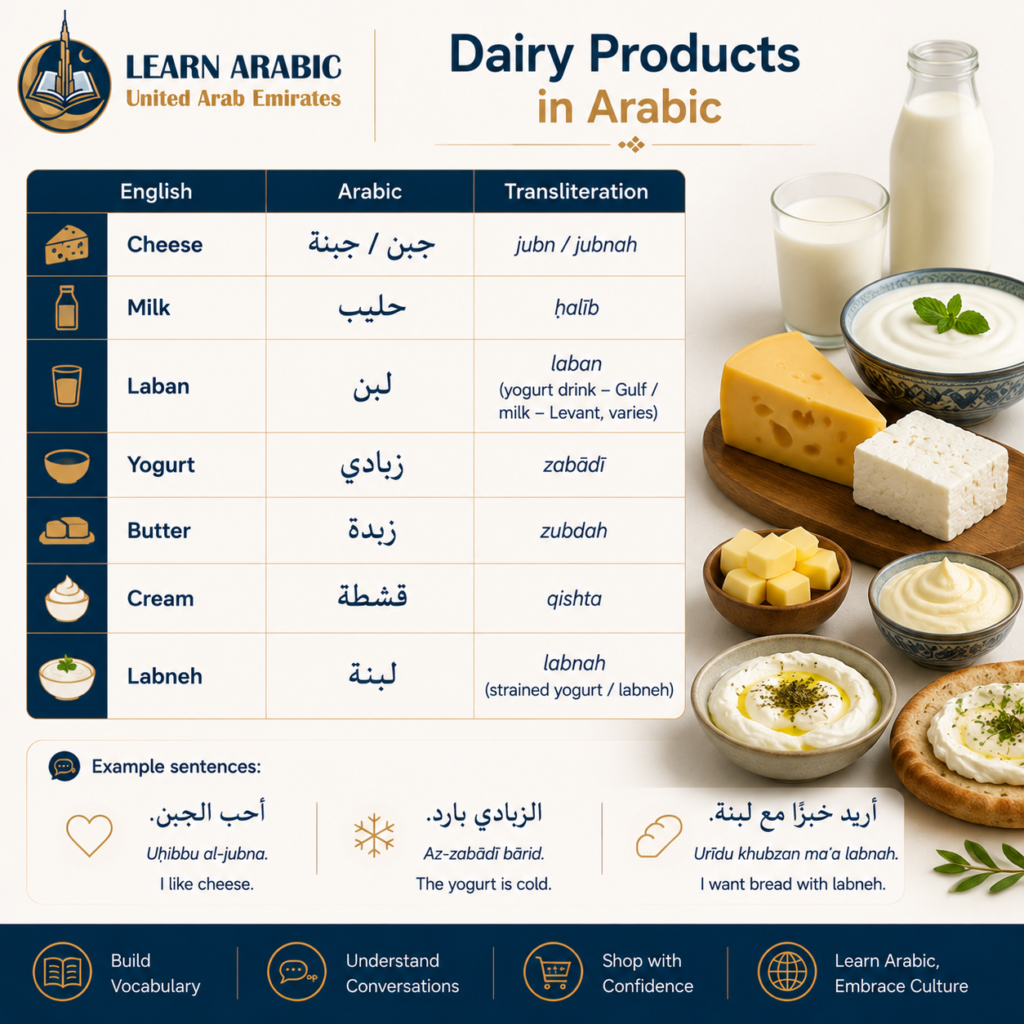
Here are the Arabic dairy vocabulary words:
- جبن / جبنة — jubn / jubnah — cheese
- حليب — ḥalīb — milk
- لبن — laban — yogurt drink (Gulf) / milk (Levant, varies)
- زبادي — zabādī — yogurt
- زبدة — zubdah — butter
- قشطة — qishta — cream
- لبنة — labnah — strained yogurt / labneh
Example sentences:
أحب الجبن. — I like cheese.
الزبادي بارد. — The yogurt is cold.
أريد خبزًا مع لبنة. — I want bread with labneh.
Read Also: Learn Quranic Vocabulary
Famous Arabic Food Names Every Learner Should Know
Beyond individual ingredients, knowing the names of famous Arabic dishes is essential for navigating restaurants, travel, and cultural conversations. These dish names appear on menus and in everyday speech across the Arab world.
Here are iconic Arabic food names with their meanings:
| Arabic | Transliteration | Meaning / Description |
| فلافل | falāfil | Falafel — fried chickpea or fava patties |
| حمص | ḥummuṣ | Hummus — chickpea dip |
| شاورما | shāwarmā | Shawarma — rotisserie meat wrap |
| كباب | kabāb | Kebab — grilled minced meat |
| كفتة | kuftah | Kofta — spiced ground meat |
| كبسة | kabsa | Kabsa — spiced rice and meat, popular in Saudi Arabia |
| مندي | mandī | Mandi — slow-cooked rice and meat dish |
| ملوخية | mulūkhiyyah | Molokhia — leafy green stew |
| محشي | maḥshī | Stuffed vegetables |
| ورق عنب | waraq ʿinab | Stuffed grape leaves |
| فتوش | fattūsh | Fattoush salad with toasted bread |
| تبولة | tabūlah | Tabbouleh — parsley and bulgur salad |
| مناقيش | manāqīsh | Flatbread with herb or cheese toppings |
| كنافة | kunāfah | Kunafa — shredded wheat and cheese dessert |
| بقلاوة | baqlāwah | Baklava — layered pastry with nuts and syrup |
Arabic Food Adjectives: How to Describe What You Eat?
Knowing food names is useful. Knowing how to describe food makes you conversational. These adjectives let you say whether something is delicious, spicy, fresh, or cold — the kind of natural commentary that marks a real language user.
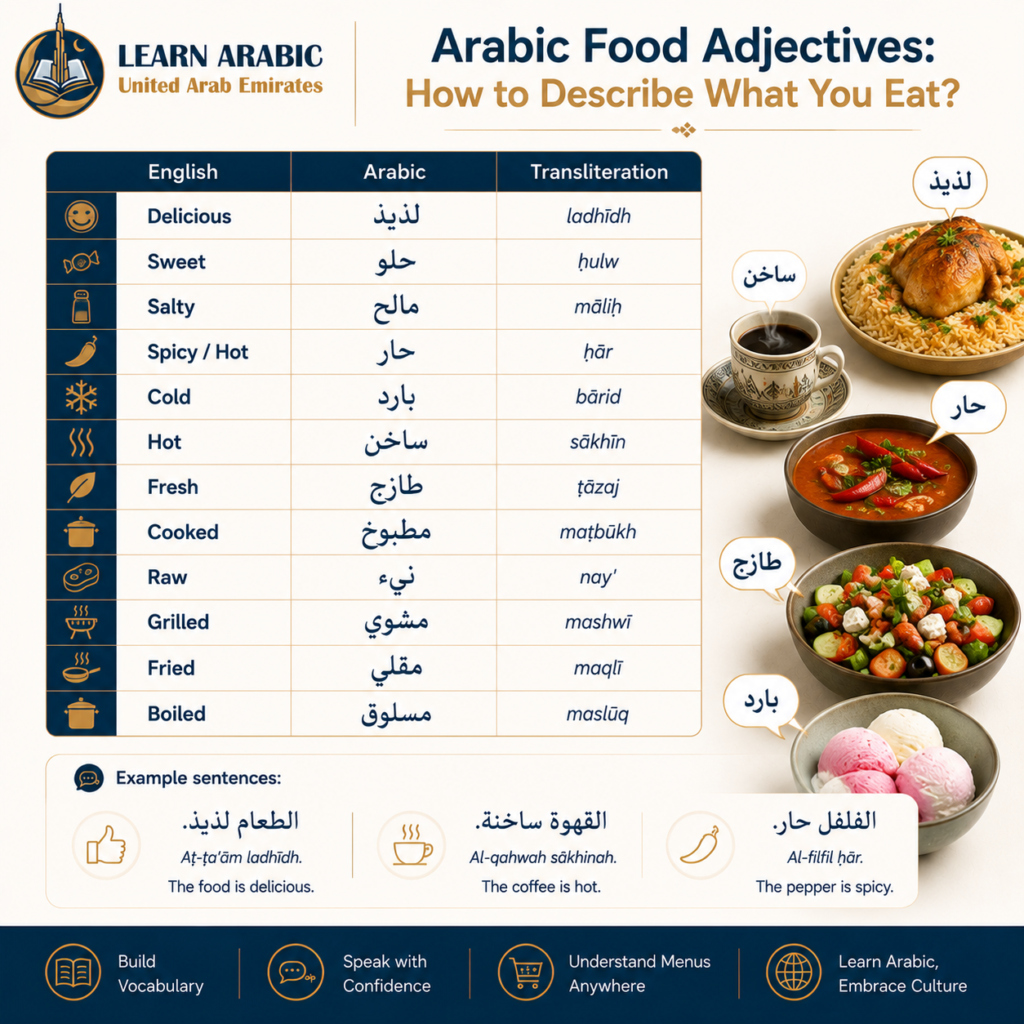
Here are the key Arabic food description words:
| English | Arabic | Transliteration |
| Delicious | لذيذ | ladhīdh |
| Sweet | حلو | ḥulw |
| Salty | مالح | māliḥ |
| Spicy / Hot | حار | ḥār |
| Cold | بارد | bārid |
| Hot | ساخن | sākhīn |
| Fresh | طازج | ṭāzaj |
| Cooked | مطبوخ | maṭbūkh |
| Raw | نيء | nay’ |
| Grilled | مشوي | mashwī |
| Fried | مقلي | maqlī |
| Boiled | مسلوق | maslūq |
Example sentences:
الطعام لذيذ. — The food is delicious.
القهوة ساخنة. — The coffee is hot.
الفلفل حار. — The pepper is spicy.
Essential Arabic Verbs for Talking About Food
Food vocabulary becomes truly useful when you combine it with the right verbs. These eight verbs are enough to build dozens of practical sentences about food, cooking, shopping, and eating.
Here are the core Arabic verbs for food conversations:
- أكل — akala — to eat
- شرب — shariba — to drink
- طبخ — ṭabakha — to cook
- اشترى — ishtarā — to buy
- طلب — ṭalaba — to order / request
- أحب — aḥabba — to like / love
- أريد — urīdu — I want
- أحتاج — aḥtāju — I need
Example sentences combining verbs and food words:
أنا آكل الأرز. — I eat rice.
أريد قهوة. — I want coffee.
أحتاج خبزًا. — I need bread.
هل تحب السمك؟ — Do you like fish?
Learners who want to practice using these verbs in structured conversation will benefit from a proper writing and speaking foundation. The Arabic writing course at Learn Arabic UAE builds exactly the sentence-construction skills that turn isolated vocabulary into real communication.
Start Improving Your Arabic Writing Skills with a FREE Trial Class

How to Order Food in Arabic?
Ordering food in Arabic is one of the first practical conversations most learners want to have. The good news is that a handful of phrases covers almost every restaurant situation.
Here are the most useful phrases for ordering food in Arabic:
- أريد هذا، من فضلك. — I want this, please.
- هل عندكم شاورما؟ — Do you have shawarma?
- أريد ماء. — I want water.
- كم السعر؟ — How much is the price?
- الطعام لذيذ جدًا. — The food is very delicious.
- بدون بصل، من فضلك. — Without onions, please.
- هل هذا حار؟ — Is this spicy?
Practice these phrases by role-playing a restaurant visit. Say the Arabic phrase out loud, then use the food words you already know to swap in different items — بدون ثوم, بدون فلفل, and so on. This kind of substitution drilling is one of the fastest ways to build conversational flexibility.
Read more: How to Introduce Yourself in Arabic?
Arabic Food Vocabulary by Meal
One of the most effective vocabulary-learning strategies is organizing words by the situation where you will actually use them. Here is a practical breakdown of Arabic food vocabulary by meal type.
At breakfast (الفطور), you’ll commonly need:
- خبز — bread
- بيض — eggs
- جبن — cheese
- حليب — milk
- شاي — tea
- عسل — honey (ʿasal)
At lunch (الغداء), the words you’ll use most are:
- أرز — rice
- دجاج — chicken
- لحم — meat
- سمك — fish
- سلطة — salad (salṭah)
- شوربة — soup (shurbah)
At dinner (العشاء) or for lighter meals:
- وجبة خفيفة — light meal / snack
- زبادي — yogurt
- فاكهة — fruit (fākihah)
- شوربة — soup
Learning by meal rather than by alphabetical list means you are always rehearsing vocabulary in the context where you will actually need it.
Start Learning Arabic the Right Way with UAE Arabic Learning Academy
Knowing how to greet people in Arabic is an excellent first step. But real fluency comes from understanding when to use each expression, pronouncing it naturally, and responding with confidence in real conversations. A structured Arabic course helps you move beyond memorizing greetings to communicating comfortably in everyday situations.
At UAE Arabic Learning Academy, learners build practical speaking skills through interactive lessons led by native Arab instructors. Whether you want to master Modern Standard Arabic, learn a regional dialect, or improve your conversational confidence for work, travel, or daily life, our step-by-step courses are designed to help you achieve your goals.
Start your free trial lesson today and turn simple Arabic greetings into confident, natural conversations.
Our Arabic courses
- Arabic Course in the UAE
- Arabic Intensive Course
- Arabic Classes for Beginners (Learn Arabic from Scratch)
- Madinah Arabic Course
- Arabic Classes for Adults
- Self-Paced Arabic Course
- Arabic Speaking Classes
- Learn to Write Arabic Course
- Arabic Grammar Course
- Learn Arabic Alphabet Course
- Modern Standard Arabic (MSA) Course
- Quranic Arabic Course
- Fusha Arabic Course
- Classical Arabic Course

Master Arabic in the UAE
Experience world-class Arabic language training designed for students and professionals in the Emirates.
Book Your Free TrialConclusion
Food in Arabic language is one of the most practical and rewarding vocabularies any learner can build. The words in this guide — from خبز and أرز to شاورما and كنافة — appear in daily life, restaurants, markets, recipes, and real conversations across the entire Arab world.
The key to making this vocabulary stick is to use it in sentences from day one. Do not just memorize lists. Say what you want, describe what you taste, ask what is available. The moment you order ماء من فضلك or say الطعام لذيذ to a native speaker, the words stop being study material and start being language.
Build by category, practice by situation, and review with real sentences. That is how Arabic food vocabulary moves from the page into your speech.
Frequently Asked Questions About Food in Arabic Language
Arabic food vocabulary covers a wide range of topics — from basic words like خبز and ماء to full dish names like كبسة and كنافة. Here are the answers to the most common questions learners ask about food in Arabic.
What does “food” mean in Arabic?
Food in Arabic is طعام (ṭaʿām). In casual daily speech, Arabic speakers often use أكل (akl) instead, which carries the sense of food or eating. Both words are correct and widely understood across all Arabic-speaking countries.
What are the most common food words in Arabic?
The most common food words in Arabic include خبز (bread), أرز (rice), دجاج (chicken), لحم (meat), سمك (fish), ماء (water), قهوة (coffee), شاي (tea), بيض (eggs), and تمر (dates). These words appear in daily conversation, on menus, and in recipes across the Arab world.
Are Arabic food names the same in all countries?
Not always. The core vocabulary is shared, but some words differ by region or dialect. Tomatoes are called طماطم in Egypt and the Gulf, but بندورة in parts of the Levant. Milk is حليب in most regions, but لبن in others — where لبن can also mean yogurt drink. Learning the standard Modern Standard Arabic (MSA) terms first gives you a solid base that is understood everywhere.
How do I say “delicious” in Arabic?
Delicious in Arabic is لذيذ (ladhīdh). To say “the food is delicious,” you say الطعام لذيذ. A common colloquial expression you will also hear after a meal is الحمد لله — “praise be to God” — which is used to express satisfaction and gratitude after eating.
What is a good way to remember Arabic food vocabulary?
The most effective method is to organize words by category — fruits, vegetables, drinks, meats — and then immediately put each word into a simple sentence. Pairing the Arabic word with a visual image (using flashcards with pictures) significantly improves retention. Practicing by situation — rehearsing what you would say at breakfast, at a restaurant, at a market — ensures the vocabulary stays connected to real use rather than abstract memorization.
How do I order food in Arabic as a beginner?
Start with two foundational phrases: أريد (urīdu) — “I want” — and من فضلك (min faḍlak) — “please.” Combine them with any food word you know: أريد دجاجًا من فضلك — “I want chicken, please.” To ask if something is available: هل عندكم…? — “Do you have…?” To ask about spice level: هل هذا حار؟ — “Is this spicy?” These four structures cover the majority of restaurant interactions a beginner will face.
Related Articles
Learn Arabic




Leave a Reply