 Learn Arabic

If you’re wondering how to learn khaleeji arabic in the UAE, you’re not alone. Thousands of expats, professionals, and new residents discover that while English is widely spoken, learning the local dialect opens doors to stronger relationships, better career opportunities, and a deeper understanding of Emirati culture.
The key is not memorizing random vocabulary lists. The fastest way to learn Khaleeji Arabic in the UAE is to combine Modern Standard Arabic (Fusha) with everyday Emirati expressions, practice consistently with native speakers, and use the language in real-life situations.
Whether you’re living in Dubai, Abu Dhabi, Sharjah, or another emirate, this guide will show you exactly how to learn khaleeji arabic in the UAE through eight practical steps that work.
Step 1: Start with Your Goal Before Choosing a Course
Before choosing a Gulf Arabic course, take a moment to define what you want to achieve. Your learning goal will determine which variety of Arabic to start with and help you make faster, more meaningful progress.
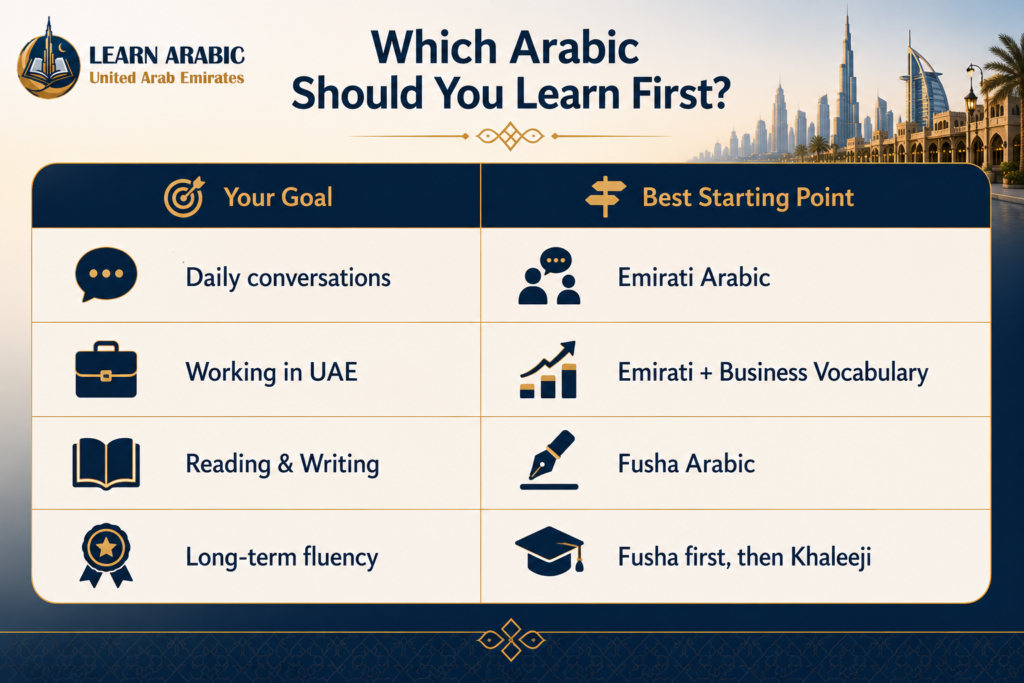
Many learners make the mistake of jumping straight into random dialect phrases without understanding where they’ll actually use them.
If you also want to improve your reading, writing, and formal communication, beginning with Fusha Arabic creates a stronger foundation before specializing in the Emirati dialect.
Join Our Fusha Arabic Classes in the UAE with a FREE Trial
Step 2: Focus on Everyday Khaleeji Arabic Used Across the UAE
Although the UAE has its own local expressions, everyday communication often includes a broader form of Khaleeji Arabic that is widely understood across the Gulf. Because the UAE is home to people from Saudi Arabia, Kuwait, Bahrain, Qatar, Oman, and the Emirates, you’ll naturally hear a mix of Gulf vocabulary and pronunciation in daily life.
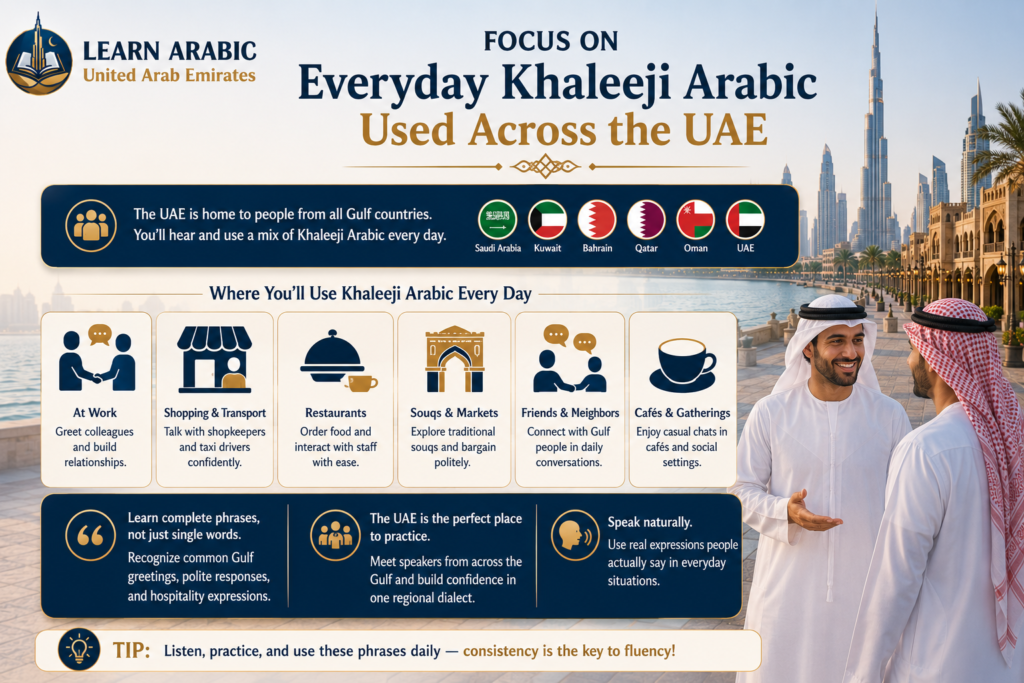
If your goal is how to learn khaleeji arabic in the UAE, focus on the expressions people actually use in common situations, such as:
- Greeting colleagues at work
- Talking with shopkeepers and taxi drivers
- Ordering food at local restaurants
- Visiting traditional souqs
- Meeting Gulf friends and neighbors
- Casual conversations in cafés and social gatherings
Rather than memorizing isolated words, learn complete phrases that appear repeatedly in everyday conversations. You’ll begin recognizing common Gulf greetings, polite responses, and hospitality expressions shared across the region, making it much easier to participate naturally in conversations.
Because the UAE brings together people from every Gulf country, it is one of the best places to practice Khaleeji Arabic with speakers from different backgrounds while still building confidence in a single regional dialect.
If you’d like to strengthen your overall Arabic foundation alongside your Gulf dialect skills, learning Modern Standard Arabic can also improve your vocabulary and sentence structure over time.
Start Our Modern Standard Arabic Classes in the UAE with a FREE Trial
Read also: Letter Ḍād (ض) in Arabic – The Letter That Defines a Language
Step 3: Build a Daily Speaking Habit Using Real UAE Situations
One of the biggest reasons learners struggle is that they study Arabic only during lessons. Real progress happens when you begin using the language throughout your day.
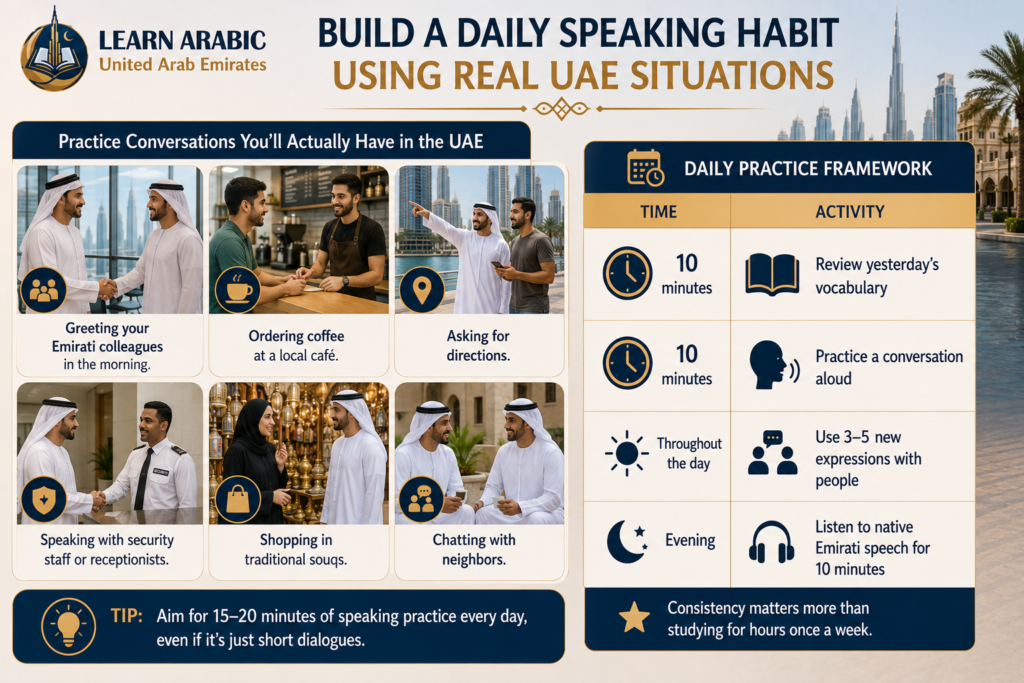
Instead of memorizing long vocabulary lists, practice conversations you’ll actually have in the UAE.
For example:
- Greeting your Emirati colleagues in the morning.
- Ordering coffee at a local café.
- Asking for directions.
- Speaking with security staff or receptionists.
- Shopping in traditional souqs.
- Chatting with neighbors.
This practical approach helps your brain connect vocabulary with real experiences, making it much easier to remember.
If you’re serious about how to learn khaleeji arabic in the UAE, aim for at least 15–20 minutes of speaking practice every day—even if you’re only repeating short dialogues aloud.
Read also: How to Learn Arabic in 7 Days in the UAE? – A Practical Day-by-Day Plan
Daily Practice Framework
The following daily study plan provides a simple routine that helps you practice Khaleeji Arabic consistently without spending hours each day.
| Time | Activity |
| 10 minutes | Review yesterday’s vocabulary |
| 10 minutes | Practice a conversation aloud |
| Throughout the day | Use 3–5 new expressions with people |
| Evening | Listen to native Emirati speech for 10 minutes |
Consistency matters much more than studying for several hours once a week.
Step Inside Our Classrooms
Don’t just take our word for it—see our community in action. Click below to watch real, live snippets from our recent classes and experience our engaging teaching style firsthand!
Master Arabic in the UAE
Experience world-class Arabic language training designed for students and professionals in the Emirates.
Book Your Free TrialStep 4: Learn the Expressions Emiratis Actually Use
While textbook Arabic teaches grammar and sentence structure, everyday conversations in the UAE rely on expressions that reflect local culture and communication styles. Emiratis frequently use greetings, polite responses, and hospitality phrases that make interactions feel natural and friendly. Learning these common expressions will help you understand how people actually speak in daily life.
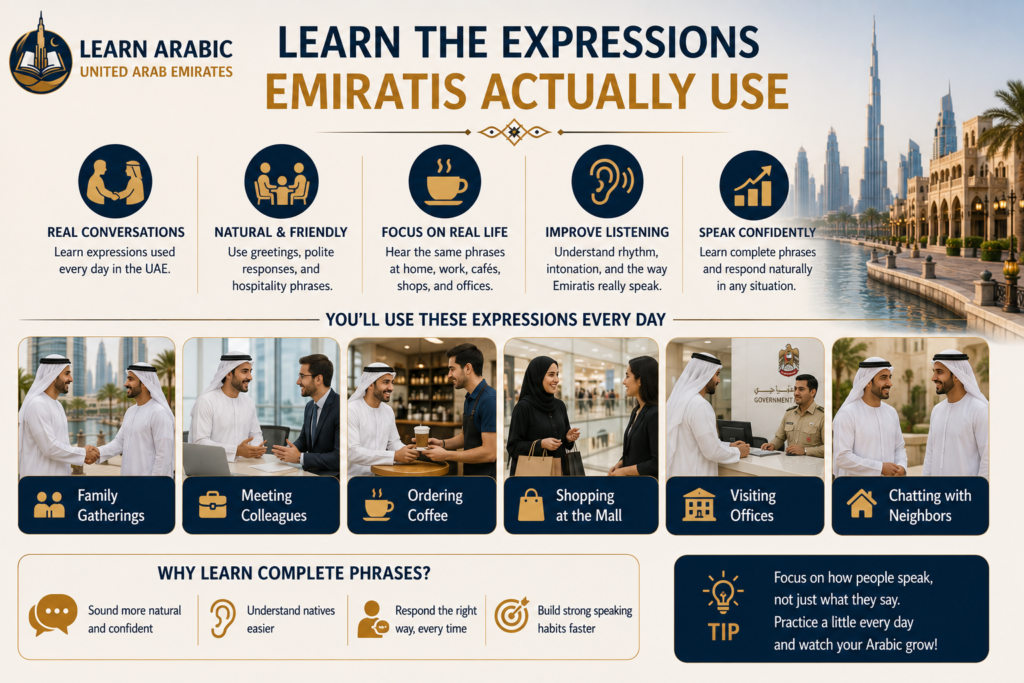
Focus on the language used in real situations rather than memorizing long vocabulary lists. Whether you’re attending a family gathering, meeting colleagues, ordering coffee, shopping at a mall, visiting a government office, or chatting with neighbors, you’ll hear the same high-frequency phrases repeated throughout the day. Becoming familiar with these expressions will help you communicate more confidently in a wide range of settings.
Learning complete phrases instead of isolated words also improves your pronunciation and listening skills. By hearing words in their natural context, you’ll develop a better sense of rhythm, intonation, and sentence flow—making it much easier to understand native speakers and respond naturally.
Read also: Can I Learn Arabic in 3 Months in the UAE?
Step 5: Practice with Qualified Native Teachers
Apps are useful for reviewing vocabulary, but they can’t tell you when your pronunciation sounds unnatural.
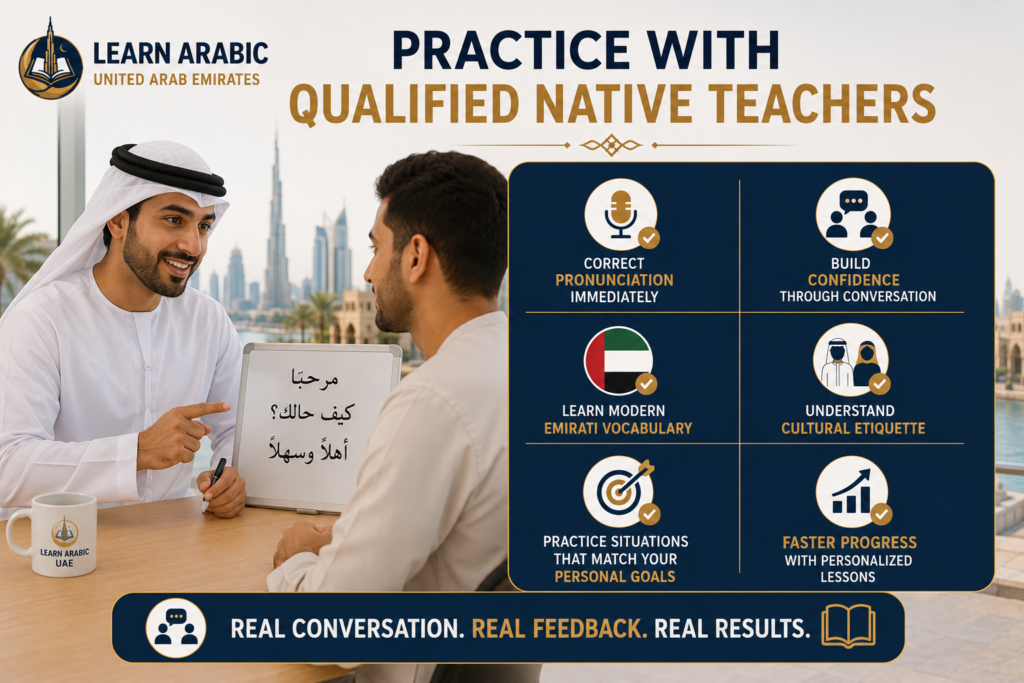
That’s especially important in Gulf Arabic, where small pronunciation differences can completely change how natural you sound.
A qualified native instructor helps you:
- Correct pronunciation immediately.
- Build confidence through conversation.
- Learn modern Emirati vocabulary.
- Understand cultural etiquette.
- Practice situations that match your personal goals.
For professionals working in Dubai or Abu Dhabi, personalized lessons often produce faster progress than self-study because every session focuses on the conversations you actually need.
Step 6: Surround Yourself with Khaleeji Arabic Every Day
One of the fastest ways to improve your Khaleeji Arabic is to make it part of your everyday life in the UAE. Because the country is home to Gulf nationals from the Emirates, Saudi Arabia, Kuwait, Bahrain, Qatar, and Oman, you’ll hear Khaleeji Arabic in many real-life situations every day.
Take advantage of your surroundings by exposing yourself to authentic Gulf Arabic whenever possible. Listen to Gulf podcasts during your commute, watch interviews with Gulf speakers, and follow content creators from across the GCC. When you’re in Dubai, Abu Dhabi, or Sharjah, pay attention to conversations in cafés, traditional souqs, shopping malls, and community events where Gulf Arabic is commonly spoken.
Don’t worry if you don’t understand every sentence at first. Focus on recognizing familiar words, greetings, and frequently used expressions. Over time, your listening skills will improve naturally, and you’ll begin noticing patterns in pronunciation and vocabulary shared across Gulf dialects.
To make your progress more consistent, keep a list of new phrases you hear each week. Practice using them in conversations with friends, classmates, or your teacher. Turning everyday exposure into active practice is one of the most effective ways to improve your speaking confidence.
If you’re an adult learner looking for structured lessons and flexible scheduling, explore the Arabic Classes for Adults.
Master Arabic with the Best Course for Adults in the UAE with a FREE Trial

Step 7: Learn the Gulf Culture Behind the Language
Speaking Khaleeji Arabic isn’t just about choosing the right words—it’s also about understanding the cultural values behind them. In the UAE, you’ll interact with people from across the Gulf, and many conversations follow shared customs rooted in respect, hospitality, and strong social connections.
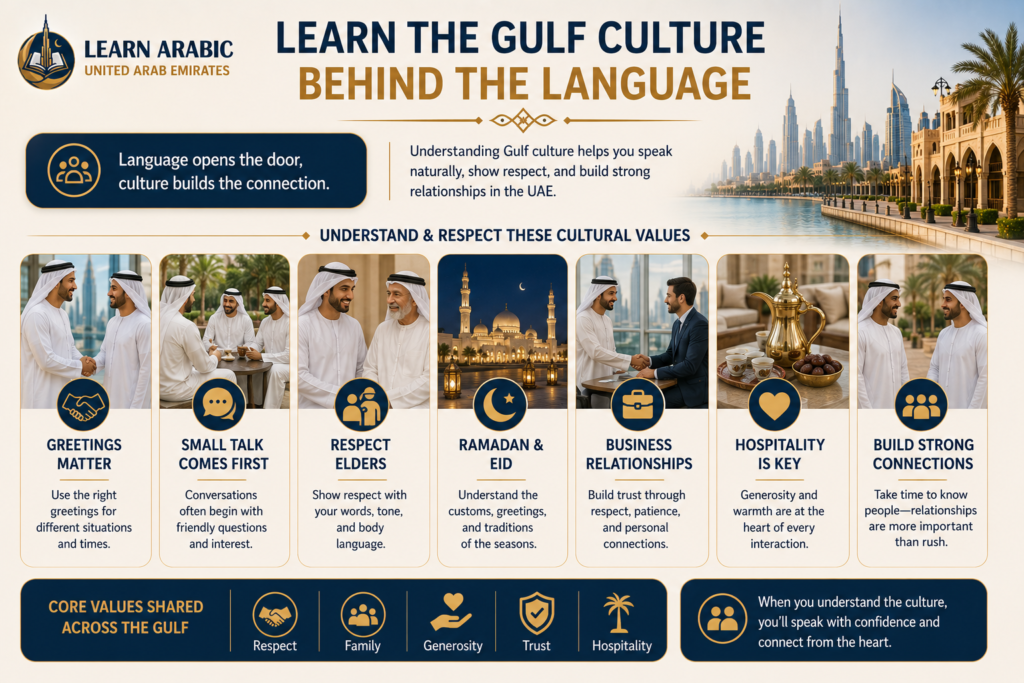
As you improve your language skills, pay attention to how Gulf speakers communicate in different situations. For example, learn when to use formal versus casual greetings, how conversations often begin with friendly small talk, and why hospitality plays such an important role in everyday interactions.
It’s also useful to become familiar with communication styles in common situations, such as:
- Greeting colleagues in professional settings.
- Visiting Gulf friends or neighbors.
- Speaking respectfully with older adults.
- Participating in Ramadan and Eid gatherings.
- Building relationships during business meetings.
- Understanding common expressions of appreciation and generosity.
These cultural habits are shared across much of the Gulf region, making them valuable whether you’re speaking with Emiratis, Saudis, Kuwaitis, Bahrainis, Qataris, or Omanis living in the UAE.
When you combine language with cultural awareness, conversations become more natural, relationships develop more easily, and you’ll gain the confidence to use Khaleeji Arabic in everyday life rather than simply translating words from English.
Read Also: Essential Khaleeji Arabic Phrases Every Expat Needs to Know
Step 8: Follow a Structured Learning Plan Instead of Random Lessons
Many learners spend months jumping between YouTube videos, apps, and social media without making real progress.
A structured curriculum keeps each lesson connected so you build vocabulary, grammar, listening, and speaking skills in the right order A simple roadmap looks like this:
| Month | Focus |
| Month 1 | Pronunciation, greetings, everyday vocabulary |
| Month 2 | Daily conversations and listening practice |
| Month 3 | Speaking confidently in real UAE situations |
| Month 4+ | Advanced conversations and cultural fluency |
This approach prevents knowledge gaps and helps you measure your progress.
If you’re learning as a family, children often progress faster through interactive lessons designed for their age and attention span.Explore the Beginner Arabic Course for Kids.
By following a clear roadmap instead of random resources, you’ll make consistent progress toward speaking naturally in everyday Emirati life.
Read Also: Arabic Alphabet for Kids
See Our Classroom Environment in Action
Experience a sneak peek into our live sessions. Watch the video below to see our specialized instructors interacting with students, breakdown complex texts, and cultivate an engaging, respectful learning environment.
Master Arabic in the UAE
Experience world-class Arabic language training designed for students and professionals in the Emirates.
Book Your Free TrialRead Also: 10 Steps to Learning Arabic Numbers for Kids in the UAE
Start Learning Khaleeji Arabic in the UAE with Expert Guidance
Learning on your own can take you only so far. If your goal is to speak confidently with Emiratis, understand local conversations, and build practical communication skills, structured lessons with experienced instructors can make a significant difference.
At Learn Arabic UAE, you’ll practice real-life conversations, receive immediate pronunciation feedback, and follow a step-by-step curriculum designed for learners living in the UAE. Whether you’re preparing for work, daily life, or long-term fluency, every lesson focuses on practical communication rather than memorizing isolated words.
Book your FREE trial lesson today and start speaking Emirati Arabic with confidence.
Our Arabic courses
- Quranic Arabic Course
- Fusha Arabic Course
- Classical Arabic Course
- Emirati Arabic Course
- Gulf Arabic Course
- Learn Saudi Arabic
- Business Arabic Course UAE
- Arabic Language Classes for Professionals in UAE

Conclusion
Learning Gulf Arabic doesn’t have to be overwhelming. The key is following a clear process instead of relying on scattered resources.
If you’re looking for how to learn khaleeji arabic in the UAE, start by defining your goal, focus on the Emirati dialect, practice every day, immerse yourself in authentic conversations, and learn with qualified native instructors who can guide your progress.
By following these eight practical steps, you’ll build the confidence to communicate naturally in everyday situations across Dubai, Abu Dhabi, Sharjah, and the rest of the UAE.
Frequently Asked Questions
If you’re wondering how to learn Khaleeji Arabic in the UAE, you’re not alone. These frequently asked questions cover the most common concerns about learning methods, study time, and choosing the right approach for your goals.
How long does it take to learn Khaleeji Arabic in the UAE?
The timeline depends on your study schedule and practice. With consistent lessons and daily speaking practice, many learners can hold basic conversations within a few months.
Should I learn Fusha or Emirati Arabic first?
If your primary goal is to communicate confidently in everyday situations across the UAE, starting with Emirati Arabic is the most practical choice.
However, if you also want to read Arabic, write professionally, or understand books, news, and formal communication, combining Emirati Arabic with Modern Standard Arabic (Fusha) will give you a stronger long-term foundation.
Is Khaleeji Arabic difficult for beginners?
No. Like any language, it becomes much easier when you focus on the vocabulary and situations you use every day instead of trying to learn everything at once.
Can I learn Khaleeji Arabic online?
Yes. Live online lessons with native instructors provide flexibility while allowing you to practice speaking, improve pronunciation, and receive personalized feedback from anywhere.
Is daily practice really necessary?
Yes. Even 15–20 minutes of daily listening and speaking practice is more effective than studying for several hours once a week. Regular exposure helps you retain vocabulary and become comfortable using the language naturally.




Leave a Reply