 Learn Arabic

If you have ever tried to read Arabic and felt a word stretch out longer than you expected, you were probably looking at an Arabic long vowel. Arabic long vowels are the three letters, alif (ا), waw (و), and yaa (ي), that extend the sound of a word instead of adding a new consonant.
Pronouncing them right is one of the fastest ways to sound less like you’re reading a foreign script and more like you’re actually speaking Arabic. This article breaks down what Arabic long vowels are and how they differ from short vowels.
It also shows you the exact rules that tell you when a letter is functioning as a long vowel rather than an ordinary consonant. You’ll also see the mistakes learners make most often and how to avoid them.
The Definition Of Arabic Long Vowels
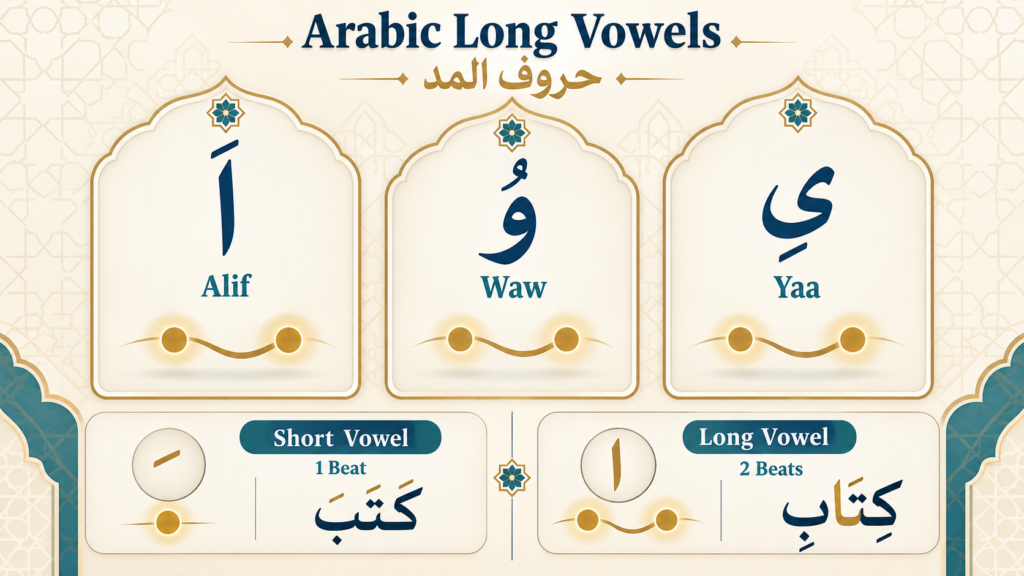
Arabic long vowels are the three letters, ا (alif), و (waw), and ي (yaa), that stretch a vowel sound instead of representing a separate consonant. Arabic linguists call them حروف المد, literally “letters of elongation,” because reading them correctly means holding the sound for roughly twice the length of a short vowel.
This is important because Arabic is a language where length changes meaning. The word كَتَبَ (kataba, “he wrote”) and a version with a long alif inserted become two different words entirely: كتاب. Skipping the elongation isn’t just an accent issue. It can change what you’re actually saying.
Long Vowels vs. Short Vowels – The Core Difference
A short vowel in Arabic is a small mark (fatha فتحة, damma ضمة, or kasra كسرة) placed above or below a letter, held for one beat.
- A long vowel is a full letter, alif, waw, or yaa, added after that mark, held for roughly two beats.
- Short vowels are marks, while long vowels are letters that carry weight in the word’s spelling itself.
Why They’re Called “Letters of Elongation”
The name حروف المد comes from the verb “to stretch” or “to prolong.” When a reader reaches one of these three letters in the right position, the vowel sound before it doesn’t stop. It continues through the letter.
This is also why they’re sometimes called حروف العلّة (“weak letters”) in Arabic grammar, as opposed to الحروف الصحيحة (“sound letters”), which are every other letter in the alphabet.
If you’re building this kind of pronunciation from scratch, working with a live instructor who can hear the difference between a one-beat and two-beat sound is far more effective than trying to judge it from text alone.
This is one of the specific skills Learn Arabic UAE instructors correct in the first few sessions, because it’s nearly impossible to self-diagnose by ear.
Read Also: Arabic Grammar For Quran
The Three Arabic Long Vowels
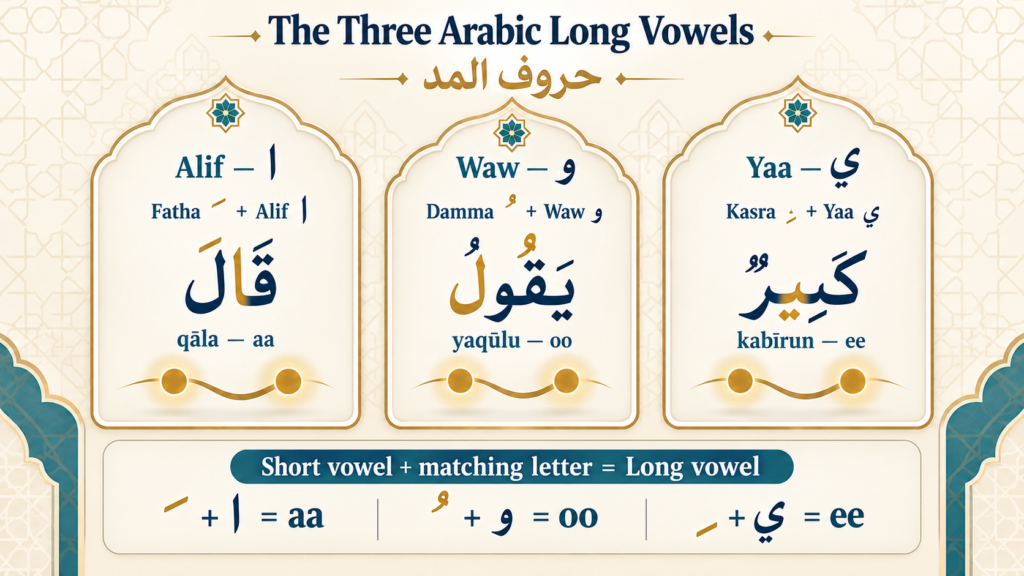
Each of the three long vowels pairs with one specific short vowel that must come immediately before it. This pairing is not optional. It is what makes the letter function as a long vowel rather than an ordinary consonant.
1. Alif (ا) As A Long Vowel
Alif ا functions as a long vowel only when the letter before it carries a fatha (the short “a” sound). In قَالَ (qaala, “he said”), the qaaf carries a fatha, and the alif that follows extends that “a” sound. Written differently, the same three letters without that fatha-alif pairing would not carry the same elongation.
2. Waw (و) As A Long Vowel
Waw و functions as a long vowel when the letter before it carries a damma ضمة (the short “u” sound). In يَقُولُ (yaqoolu, “he says”), the qaaf carries a damma, and the following waw stretches that sound into a long “oo.”
3. Yaa (ي) As A Long Vowel
Yaa ي functions as a long vowel when the letter before it carries a kasra (the short “i” sound). In كَبِيرٌ (kabeerun, “big”), the baa carries a kasra, and the yaa that follows stretches it into a long “ee.”
Read Also: Arabic Grammar For Beginners
Short Vowels – The Building Blocks Of Long Vowels
You cannot understand Arabic long vowels without first understanding the short vowels they grow out of. Short vowels are marks called حركات (harakaat), fatha, damma, and kasra, placed above or below a consonant to give it a one-beat sound.
Each short vowel corresponds to exactly one long vowel: fatha pairs with alif, damma pairs with waw, and kasra pairs with yaa.
A useful way to think about it is that the short vowel is a preview of the long vowel. If you know which short vowel sits on a letter, you already know which long vowel could follow it.
How The Matching Actually Comes From
Take the letter م (meem). With a fatha, it reads مَ, a single “ma” beat. Add an alif, and it becomes مَا, a stretched “maa.” The same pattern applies across every consonant in the alphabet. The short vowel tells you the sound, and the long vowel tells you to hold it.
This matching rule is also the single fastest diagnostic for reading unfamiliar words aloud. Check the vowel on the letter right before an alif, waw, or yaa, and you’ll immediately know whether that letter is a long vowel or something else.
We call this the two-second check in our own teaching materials. Glance at the preceding letter’s mark before you commit to a pronunciation, instead of guessing from the shape of the word.
Read Also: Arabic Short Vowels
Step Inside Our Classrooms
Don’t just take our word for it—see our community in action. Click below to watch real, live snippets from our recent classes and experience our engaging teaching style firsthand!
Master Arabic in the UAE
Experience world-class Arabic language training designed for students and professionals in the Emirates.
Book Your Free TrialRules For Recognizing A True Arabic Long Vowel
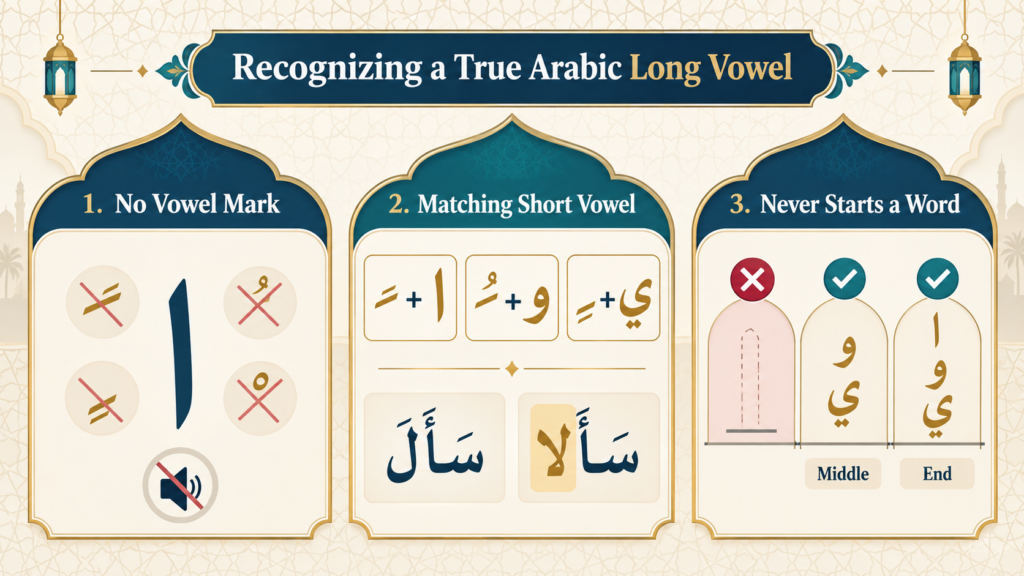
Not every alif, waw, or yaa in a word is functioning as a long vowel. Some are original root letters that happen to look identical. Three rules separate a genuine long vowel from an ordinary consonant.
1. Rule One – The Letter Must Be Silent
A true long vowel carries no vowel mark of its own. It is never given a fatha, damma, kasra, or even a sukun. It is simply silent by nature, because its only job is to extend the sound already established by the letter before it.
2. Rule Two – It Must Be Preceded By The Matching Short Vowel
As covered above, alif needs a fatha before it, waw needs a damma, and yaa needs a kasra. If that matching vowel isn’t there, the letter is functioning as an ordinary consonant, not a long vowel.
This is exactly how Arabic distinguishes the original hamza-alif in a word like سَأَلَ from the long-vowel alif in a word like سَأَلا.
3. Rule Three – It Never Opens A Word
A long vowel can appear in the middle or at the end of a word, but never at the very beginning. Any alif, waw, or yaa you see starting a word is doing a different grammatical job.
This is a detail many textbooks skip. It’s one of the more common sources of confusion for learners trying to sound out new vocabulary.
Common Mistakes Learners Make With Arabic Long Vowels
Arabic long vowels are simple in principle, but learners often struggle to recognize when a letter is truly extending a sound and to preserve its correct length during fluent speech.
The following two mistakes cause most long-vowel pronunciation problems and should be corrected early.
1. Treating An Original Letter As A Long Vowel
Words like مَأْسَاة (tragedy) contain an alif that is part of the root. The hamza before it makes this an original letter, not a long vowel, immediately followed by a genuine long-vowel alif later in the same word.
Learners who haven’t internalized Rule One and Rule Two often stretch both equally, which changes the rhythm of the word.
2. Shortening The Vowel Under Time Pressure
When reading quickly or reciting from memory, it’s easy to compress a two-beat long vowel down to a one-beat short vowel, especially under nervousness. This is one of the most common corrections instructors give in live recitation practice.
It’s a timing habit, not a knowledge gap, which is why it responds well to guided repetition rather than more reading on your own. If self-study has plateaued on this exact issue, a structured course with real-time feedback closes that gap far faster than solo practice.
Learn Arabic UAE runs live sessions built specifically around correcting these pronunciation habits early, before they become permanent.
Read Also: Connecting Arabic Letters Practice
Free Online Resources For Learning Arabic Long Vowels
Learning Arabic long vowels becomes easier when you combine clear explanations with listening and interactive practice.
The following free resources help beginners recognize ا، و، ي, connect each letter to its correct sound, and distinguish long vowels from short vowels through videos, games, and simple exercises.
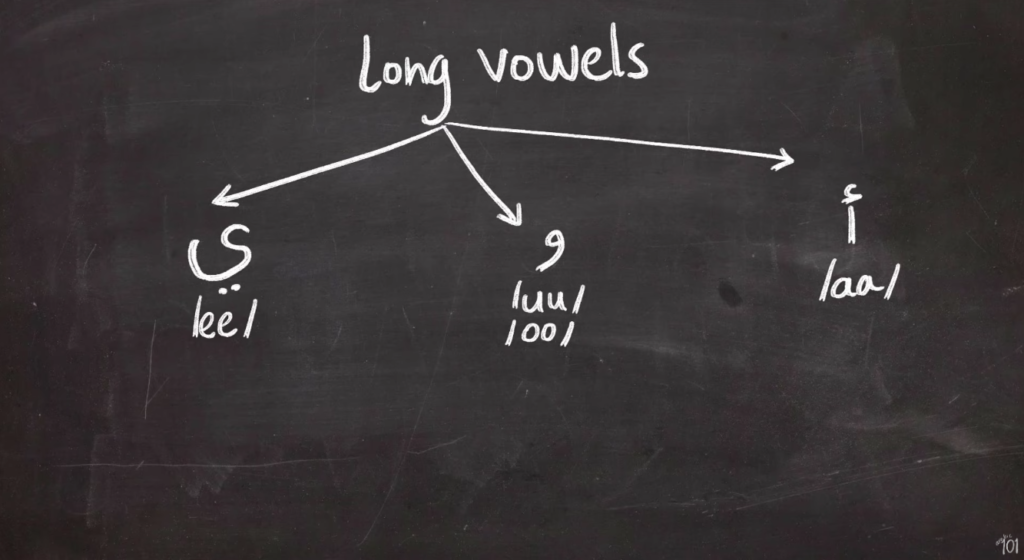
1. The Arabic 101 YouTube Channel- Watch And Learn
The Arabic 101 YouTube channel teaches Arabic long vowels through clear visual explanations and beginner-friendly pronunciation examples. Its free lessons help learners recognize ا، و، ي, understand their sounds, and distinguish long vowels from short vowels more easily.
2. The Wordwall Platform – Learn And Have Fun With The Interactive Games
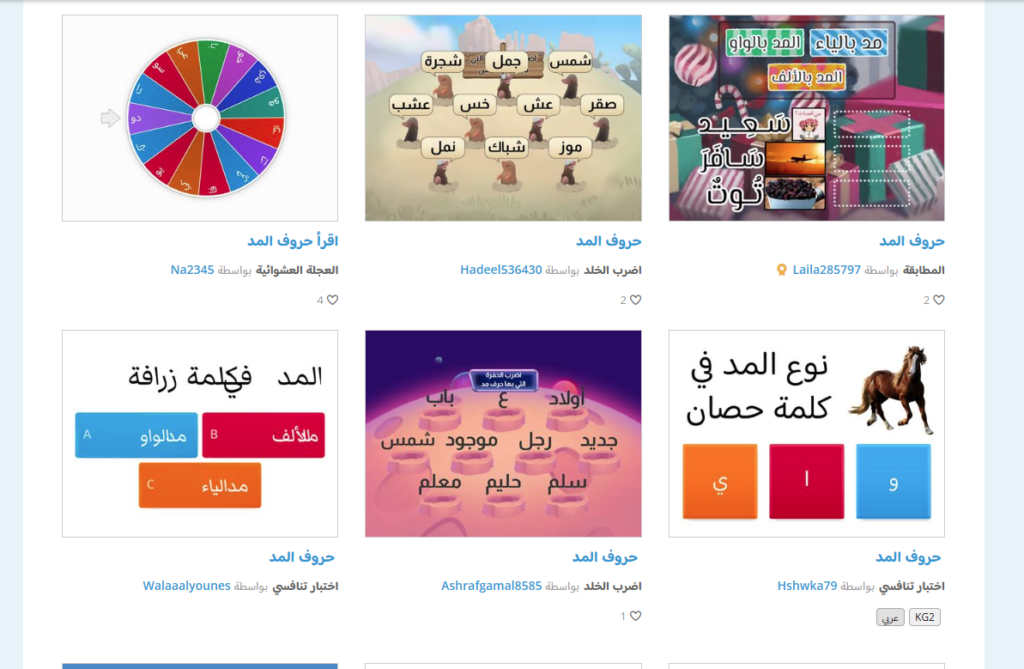
The Wordwall Platform makes learning Arabic long vowels more engaging through interactive games, quizzes, matching activities, and spinning-wheel exercises.
These fun activities help learners recognize ا، و، ي, practise identifying them within words, and reinforce their knowledge through repetition and immediate feedback.
3. The Arabic Letters & Vowels App – Listen, Read, And Practice
The Arabic Letters & Vowels app uses colorful pictures, sounds, and simple exercises to teach Arabic long vowels. It helps beginners recognize ا، و، ي, connect them with spoken sounds, and practise reading words in an engaging, child-friendly way.

Read also: How long to learn Arabic in the UAE?
See Our Classroom Environment in Action
Experience a sneak peek into our live sessions. Watch the video below to see our specialized instructors interacting with students, breakdown complex texts, and cultivate an engaging, respectful learning environment.
Master Arabic in the UAE
Experience world-class Arabic language training designed for students and professionals in the Emirates.
Book Your Free TrialStart Speaking Arabic With Confidence Today
Reading about long vowels only gets you so far; hearing them, repeating them, and being corrected in real time is what actually fixes your pronunciation.
Learn Arabic UAE’s live instructors work with you one-on-one to catch exactly the kind of small vowel-length errors that are nearly impossible to notice on your own.
If you would like personalized support, explore Learn Arabic UAE’s live lessons and begin improving your pronunciation at a pace that feels comfortable.
Our Arabic courses
- Arabic Course in the UAE
- Arabic Intensive Course
- Arabic Classes for Beginners (Learn Arabic from Scratch)
- Madinah Arabic Course
- Arabic Classes for Adults
- Self-Paced Arabic Course
- Arabic Speaking Classes
- Learn to Write Arabic Course
- Arabic Grammar Course
- Learn Arabic Alphabet Course
- Modern Standard Arabic (MSA) Course
- Quranic Arabic Course
- Fusha Arabic Course
- Classical Arabic Course
- Emirati Arabic Course
- Gulf Arabic Course
- Learn Saudi Arabic
- Business Arabic Course UAE
- Arabic Language Classes for Professionals in UAE
Our Arabic Courses for Kids
- Arabic Course for Kids
- Arabic Conversation Course for Kids
- Arabic Qaida Course for Kids
- Beginner Arabic Course for Kids
- Arabic Grammar Course for Kids
- Teen Arabic Summer Course
- UAE Kindergarten Arabic Classes
Conclusion
Arabic long vowels, alif, waw, and yaa, are the three letters that stretch a vowel sound to roughly double its short-vowel length, and they only function this way when a matching short vowel (fatha, damma, or kasra) comes directly before them.
Recognizing them means checking three things every time: is the letter silent, does the correct short vowel precede it, and is it anywhere but the start of the word? Once these rules become automatic, reading Arabic aloud stops feeling like decoding and starts feeling like actual speech.
Accurate vowel length also protects the meaning of words and makes pronunciation easier for listeners to understand.
Regular listening and aloud repetition will help the one-beat and two-beat distinction become natural. With consistent practice and corrective feedback, learners can recognize Arabic long vowels quickly and pronounce them confidently in complete sentences.
Frequently Asked Questions
What Are The Three Arabic Long Vowels?
The three Arabic long vowels are alif (ا), waw (و), and yaa (ي). Each one extends a specific short vowel sound, fatha, damma, and kasra, respectively, and none of them can appear at the very start of a word.
How Are Long Vowels Different From Short Vowels In Arabic?
Long vowels are full letters added to a word and held for about two beats, while short vowels are small marks placed above or below a letter and held for one beat. Every short vowel has one matching long vowel: fatha with alif, damma with waw, and kasra with yaa.
Can A Long Vowel Carry Its Own Vowel Mark?
No, a true long vowel is always silent and never carries a fatha, damma, kasra, or sukun of its own. If you see one of these letters with a vowel mark on it, it is functioning as an original consonant, not a long vowel.
Why Do Some Words Look Like They Have A Long Vowel But Don’t?
Some words contain an alif, waw, or yaa that is an original root letter rather than a long vowel, often marked by a hamza or a different vowel pattern before it. The giveaway is the matching rule: if the correct short vowel isn’t sitting on the letter right before it, it isn’t a genuine long vowel.
Is It Hard For English Speakers To Hear The Difference Between Long And Short Vowels?
Many English speakers find vowel length harder to hear than vowel quality, since English doesn’t use length to distinguish words the same way Arabic does. This is usually fixed faster through guided listening and repetition with a native or fluent instructor than through reading alone.




Leave a Reply