 Learn Arabic
Finding the right Arabic books for kids can feel overwhelming — especially when you’re looking for something that genuinely holds a child’s attention while still teaching real language skills.
The good news is that the market for children’s Arabic literature has grown significantly, and there are now some excellent titles designed to build reading, writing, listening, and vocabulary skills from the earliest stages.
This guide covers ten of the best Arabic books for children, organized to help you match each book to your child’s age and learning stage. Whether your little one is just discovering letters or ready to read short sentences, there’s something here worth adding to the bookshelf.
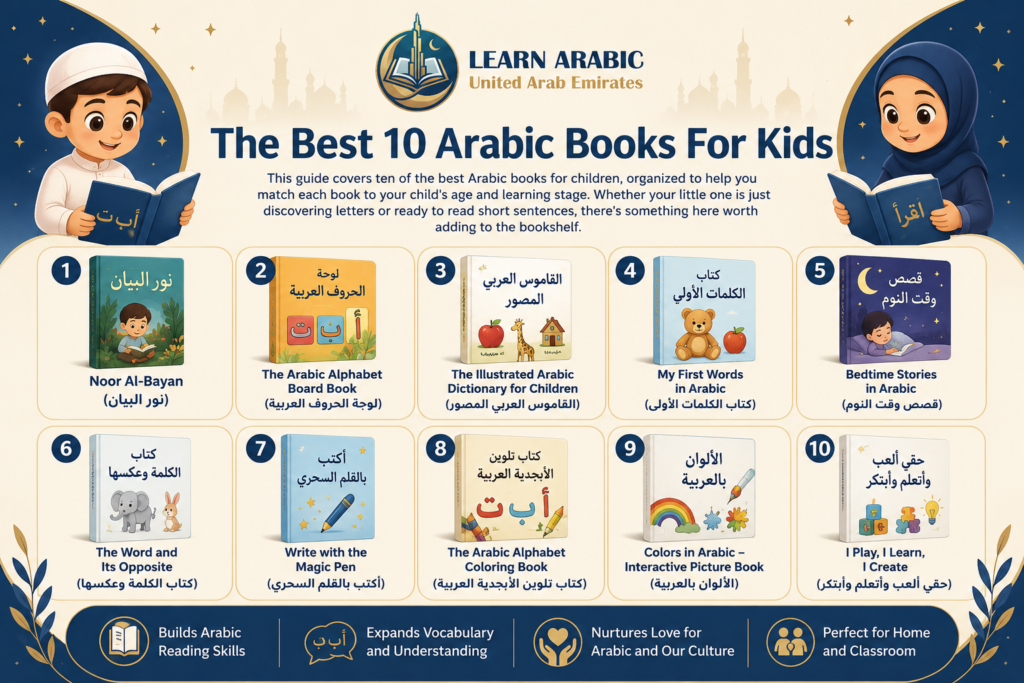
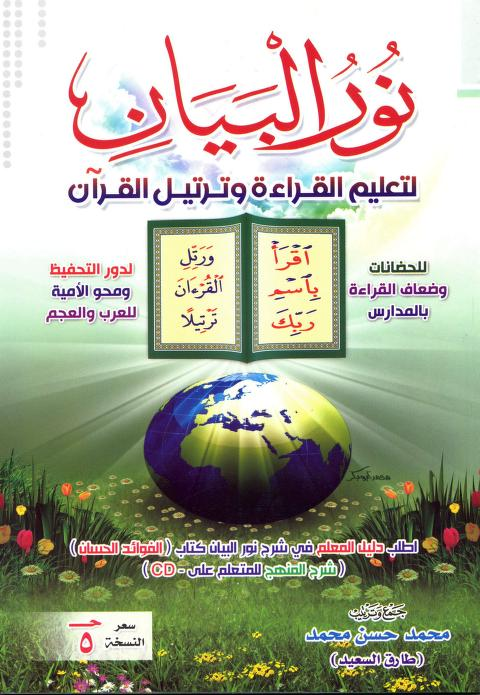
1. Noor Al-Bayan (نور البيان), One Of The Best Arabic Books For Kids
Noor Al-Bayan is one of the most widely used Arabic reading primers across the Arab world, and for good reason. The series introduces children to the Arabic alphabet through a structured, phonics-based method that mirrors how classical Arabic literacy was traditionally taught.
Each lesson builds on the one before it, starting with isolated letters and moving toward syllables, then whole words. The connection to Quranic recitation makes it particularly popular among families who want to build both literacy and a foundation for religious learning simultaneously.
What sets it apart is its simplicity. There are no distracting graphics — just clean, clearly printed text that keeps the child focused on the letters themselves. It is suitable for children aged 4 to 7 years.
Read also: Clothes in Arabic: Vocabulary, Phrases, and Cultural Guide
2. The Arabic Alphabet Board Book (لوحة الحروف العربية)
This illustrated board book pairs each letter of the Arabic alphabet with a corresponding image, making letter recognition a visual and memorable experience. The pages are thick and durable — designed for small hands that tend to be rough with books.
Children who respond well to picture-based learning will find this format intuitive. Each letter appears in its multiple positional forms (beginning, middle, and end of a word), which gives young learners early exposure to how Arabic script actually functions in context.
Parents looking to build a vocabulary foundation alongside letter recognition should consider pairing this with guided conversation about the images — pointing at the picture, saying the word aloud, and encouraging the child aged 3 to 6 years to repeat it.
Join Our Self-Paced Arabic Classes in the UAE with a FREE Trial

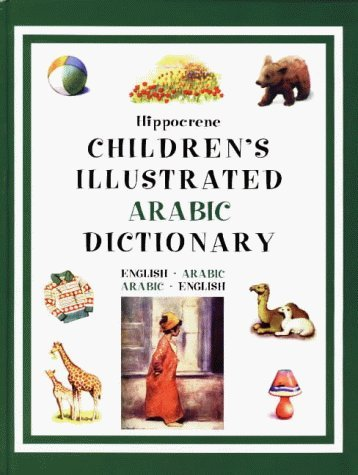
3. The Illustrated Arabic Dictionary for Children (القاموس العربي المصور)
This illustrated dictionary is one of the most practical Arabic books for kids at the early elementary stage. It organizes vocabulary thematically — animals, food, the home, transport, nature — and presents each word alongside a clear, child-friendly illustration.
Reading isn’t passive with this book. Children naturally flip to the topics that interest them, learning words in context rather than in isolation. That sense of agency makes a real difference in retention for children aged 5 to 9 years.
The thematic organization also makes it easy for parents to use at home. Sit with your child during dinner and turn to the food section. Walk through the house and match rooms to the relevant pages. The best way to learn Arabic vocabulary at any age involves connecting new words to real experiences, and this book makes that approach accessible even for young children.
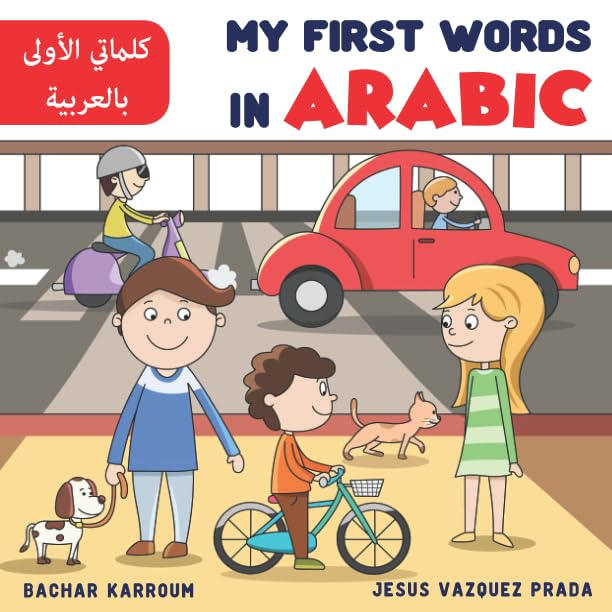
4. My First Words in Arabic (كتاب الكلمات الأولى)
Bright colors, simple words, and cheerful illustrations make this one of the most inviting entry points for very young children encountering Arabic for the first time. The book presents everyday vocabulary — body parts, family members, common objects — in a format that’s designed to be read aloud together.
There’s deliberate repetition throughout, which is exactly what early childhood language acquisition research recommends. When a child hears and sees the same word in several different contexts across a few pages, it moves from short-term recognition into genuine memory.
This works particularly well as a bedtime or storytime book, where the shared reading experience becomes part of the routine. It is highly recommended for children aged 2 to 5 years.
Step Inside Our Classrooms
Don’t just take our word for it—see our community in action. Click below to watch real, live snippets from our recent classes and experience our engaging teaching style firsthand!
Master Arabic in the UAE
Experience world-class Arabic language training designed for students and professionals in the Emirates.
Book Your Free Trial5. Bedtime Stories in Arabic (قصص وقت النوم)
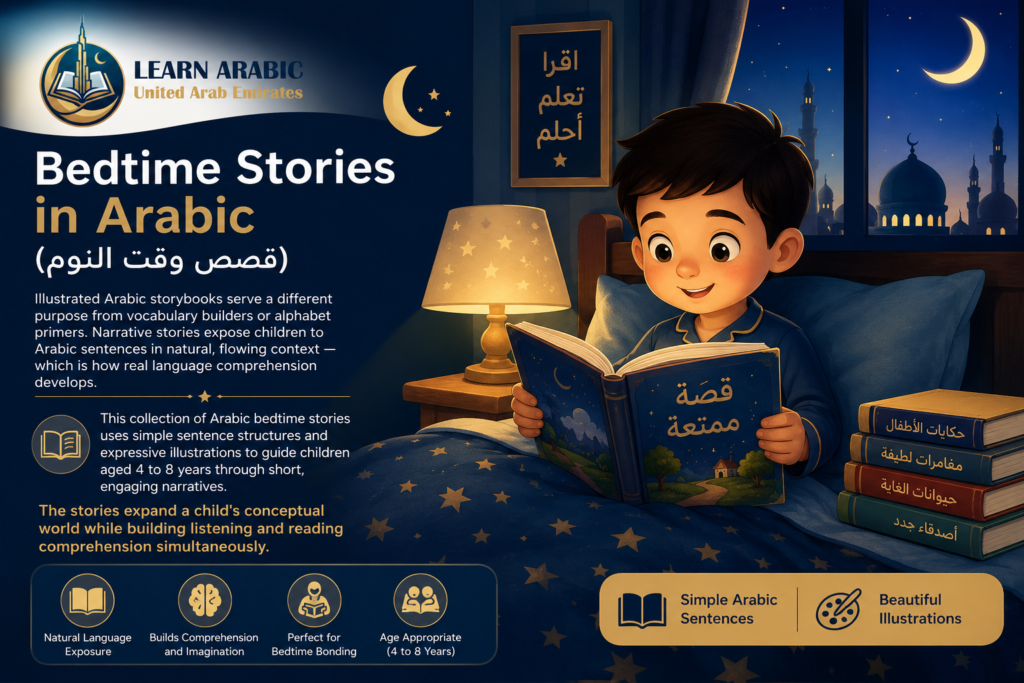
Illustrated Arabic storybooks serve a different purpose from vocabulary builders or alphabet primers. Narrative stories expose children to Arabic sentences in natural, flowing context — which is how real language comprehension develops.
This collection of Arabic bedtime stories uses simple sentence structures and expressive illustrations to guide children aged 4 to 8 years through short, engaging narratives. The stories expand a child’s conceptual world while building listening and reading comprehension simultaneously.
Reading stories aloud together is also an ideal opportunity to introduce children to Arabic sentences for kids — pointing to a sentence, reading it slowly, and encouraging the child to follow along with their finger.
6. The Word and Its Opposite (كتاب الكلمة وعكسها)
Opposites are a powerful vocabulary-building device because they give children two words for the price of one, and the contrast between them makes both easier to remember. This book pairs common Arabic words with their antonyms, each accompanied by clear illustrations that make the contrast visually obvious.
Big and small. Hot and cold. Near and far. Simple concepts, but the Arabic vocabulary behind them is foundational. Children who work through this book tend to develop a more flexible grasp of adjective vocabulary, which makes a noticeable difference when they start forming their own sentences. It is suitable for children aged 5 to 8 years.
7. Write with the Magic Pen (أكتب بالقلم السحري)
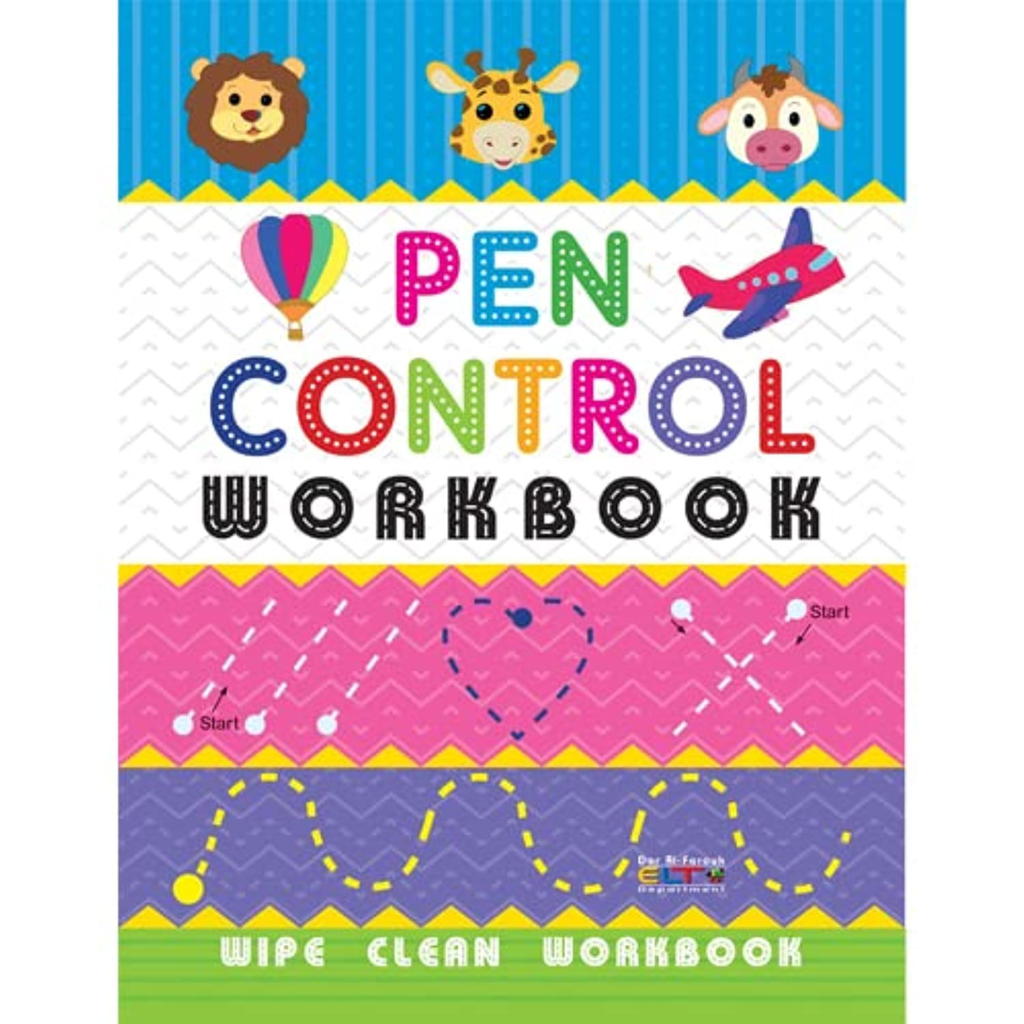
Writing in Arabic requires specific motor skills that don’t develop automatically — children need guided practice to learn the correct stroke order and direction for each letter. This wipe-and-clean activity book series solves that problem in a genuinely child-friendly way for children aged 4 to 7 years.
Children trace letters and numbers with a special pen, then wipe the page clean and start again. The reusable format means the book stays useful for months rather than being filled and discarded. It’s particularly effective for building the fine motor confidence that underpins legible Arabic handwriting later on.
For children who benefit from structured handwriting support alongside their book practice, Arabic writing classes can reinforce what’s learned on the page with real-time feedback from a qualified instructor.
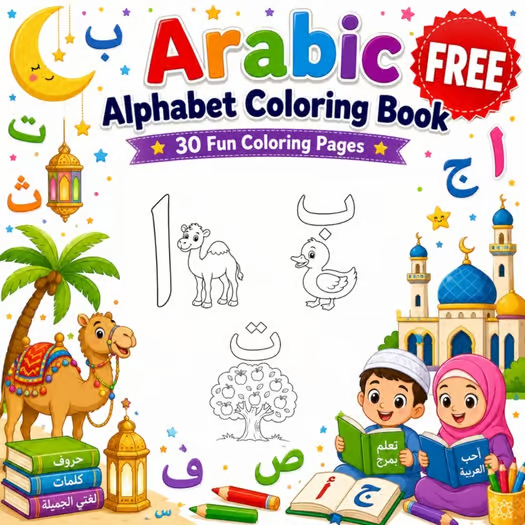
8. The Arabic Alphabet Coloring Book (كتاب تلوين الأبجدية العربية)
Coloring books get underestimated as educational tools, but the act of coloring a letter — tracing its outline, filling it in, decorating the illustration around it — creates a strong sensory memory. Children aged 3 to 6 years who struggle to retain letters through passive reading often respond remarkably well to this kind of hands-on engagement.
Each page presents a letter in large format alongside a related word and illustration. The coloring activity naturally slows children down, giving them more time with each letter than a standard reading exercise would.
Combined with a parent pointing out the letter’s name and sound during the activity, it becomes a genuinely multi-sensory learning experience.
9. Colors in Arabic — Interactive Picture Book
Color vocabulary is among the first things children acquire in any language, and Arabic is no different. This category of interactive picture books pairs vivid color illustrations with the corresponding Arabic color names, making the learning process almost effortless.
Understanding colors in Arabic opens up a surprisingly wide vocabulary range for young learners aged 2 to 5 years — from describing the world around them to understanding descriptions in Arabic stories and conversations.
10. I Play, I Learn, I Create (حقي ألعب وأتعلم وأبتكر)
This multi-level activity workbook series takes a more structured approach, combining language exercises with creative activities that keep children genuinely engaged. The books are organized by developmental level, so parents can start with Level 1 and progress as the child’s skills grow.
Activities include letter tracing, simple reading exercises, vocabulary matching, and drawing tasks — all designed to develop the four core language skills in an integrated way. It’s a strong choice for children aged 4 to 7 years who find purely text-based books unstimulating.
Read Also: Essential Arabic Vocabulary for Kids
How to Choose the Right Book for Your Child?
The list above covers a range of learning styles and ages, but choosing the right book comes down to a few practical questions.
A. Consider your child’s age and current level of Arabic
A three-year-old needs touchable, visual, repetitive content. A six-year-old can handle more structured reading and writing exercises. Don’t push a child toward a book that’s beyond their developmental stage — it creates frustration rather than progress.
B. Match the book to your child’s learning style
Some children are visual learners who thrive with illustrated vocabulary books. Others are kinesthetic — they need to trace, color, and write. A few do best with narrative stories read aloud. The most effective approach usually involves multiple formats over time.
Read Also: How to Teach Kids Arabic in the UAE?
Develop Your Child’s Fluency Across All Four Language Skills
Once a child has a solid grounding in the Arabic alphabet and basic vocabulary, the natural next step is developing fluency across all four language skills. Books are ideal for reading and writing, but speaking and listening require real interaction.
At this stage, many families begin looking for structured courses that can formalize and accelerate what home learning has started. For children learning Modern Standard Arabic — the written and formal register used across education, media, and literature — Modern Standard Arabic classes provide a structured pathway that connects early literacy to long-term academic fluency.
For older children ready to move from individual words to full expressions, exploring learn Arabic phrases builds the conversational confidence that makes the language feel alive rather than purely academic.
And for families curious about what learn Arabic for kids in the UAE looks like in practice — including the specific challenges and opportunities for children growing up in the Gulf — there’s dedicated guidance worth reading before committing to a curriculum.
Read Also: Top 10 Funny Arabic Activity for Kids in the UAE
See Our Classroom Environment in Action
Experience a sneak peek into our live sessions. Watch the video below to see our specialized instructors interacting with students, breakdown complex texts, and cultivate an engaging, respectful learning environment.
Master Arabic in the UAE
Experience world-class Arabic language training designed for students and professionals in the Emirates.
Book Your Free TrialRead Also: 10 Steps To Learn Egyptian Arabic for Kids
Why Learn Arabic UAE Stands Out for Young Learners?
Learn Arabic UAE was built around a straightforward conviction: structured, expert-led instruction produces results that self-study alone cannot replicate. That principle holds just as true for children as for adults.
The team at Learn Arabic UAE brings together qualified Arabic language specialists who understand how children acquire language — not just how adults teach it. Courses are designed to complement what children learn at school and at home, reinforcing correct pronunciation, proper letter formation, and grammatical foundations from the earliest stages.
Results speak for themselves. Students who combine structured instruction with home reading practice — including the kinds of books recommended in this guide — consistently outperform peers who rely on either approach alone. Children gain confidence faster, make fewer fossilized errors, and build genuine enthusiasm for the language when they see real progress week after week.
For families in the UAE looking for a trusted partner in their child’s Arabic education, Learn Arabic UAE offers courses across every level and learning goal.
Start your Arabic course today

Our Arabic Courses
- Arabic Course in the UAE
- Arabic Classes for Beginners (Learn Arabic from Scratch)
- Arabic Language Classes for Professionals in UAE
- Arabic Classes for Adults
- Self-Paced Arabic Course
- Arabic Speaking Classes
- Arabic Grammar Course
- Learn Arabic Alphabet Course
- Quranic Arabic Course
- Fusha Arabic Course
- Classical Arabic Course
- Gulf Arabic Course
Conclusion
Arabic books for kids are not all equivalent, and the age label on the cover is only the beginning of the selection process. The most important factor is matching the book’s function — phonics, vocabulary, graded reading, activity-based production — to the specific skill your child currently needs to develop.
In the UAE, the stakes are practical: Arabic is compulsory in schools, woven into Islamic education, and essential for children growing up in an Arabic-speaking society.
Starting with books that build genuine reading ability — complete tashkeel, clear Naskh script, culturally relatable content — gives children a real head start. Pairing that daily reading habit with expert instruction from Learn Arabic UAE closes the gap between reading Arabic and speaking, understanding, and using it.
The right book, chosen deliberately, does more than occupy twenty minutes before bedtime. It becomes the first step of a language relationship your child will carry for life.
Frequently Asked Questions
At what age should children start learning Arabic with books?
Children as young as two can benefit from simple illustrated picture books that build color and object vocabulary. Structured alphabet learning typically begins around ages four to five, when children have the fine motor skills for tracing and the cognitive readiness for letter recognition.
Are Arabic children’s books available in the UAE?
Yes — major bookstores, online retailers, and educational suppliers across the UAE stock a wide range of Arabic children’s books. Many are also available digitally through platforms like 3asafeer.com.
How many Arabic books should a child read per week?
Frequency matters more than quantity. Reading one book together daily — even a short picture book — produces better retention than occasional longer sessions. Consistency is the key variable.
Should I choose books in Modern Standard Arabic or a dialect?
For foundational literacy, Modern Standard Arabic (Fusha) is recommended. It’s the language of schooling, literature, and formal communication, and books in MSA will serve children across all educational contexts.
Can books alone teach a child Arabic?
Books provide an excellent foundation for reading and vocabulary, but they work best as part of a broader learning environment that includes listening, speaking practice, and structured instruction. Combining quality books with professional tuition produces the fastest and most durable results.
Related Articles
Learn Arabic



Leave a Reply